Talking to kids about dog attacks - without scaring them
The recent figures around dog bites can be unsettling, but it's important to keep perspective and educate your child on dog behaviours and interactions.
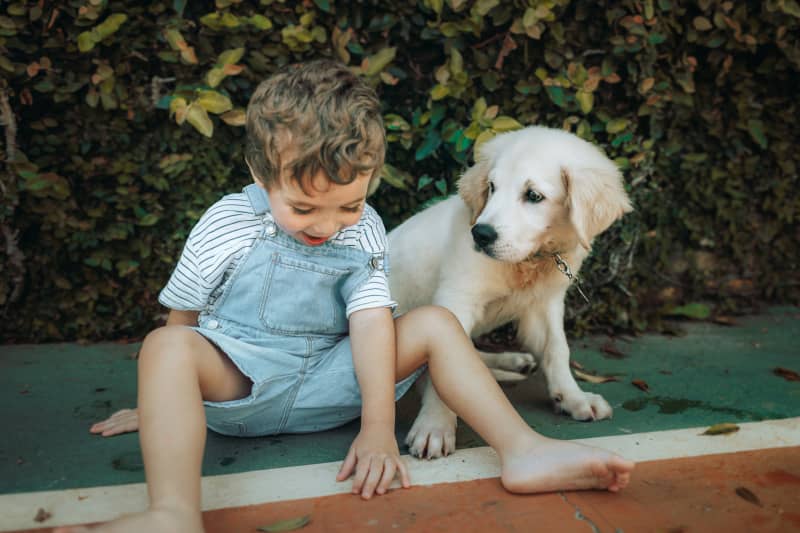
After the recent tragic fatal dog attack in Northland, it’s understandable that parents, caregivers and dog owners may feel shaken.
The latest incident marks the fourth fatal dog attack in four years — three of those in Northland. Data analysed from the Department of Internal Affairs by MoneyHub shows ACC claims for dog bites have risen 20 percent since 2020, reaching more than 15,000 claims in a year. Nationwide, more than 9000 dogs are classified as menacing and 573 as dangerous, the financial hub said.
Those numbers can sound alarming. But animal behaviourist Mark Vette, who has worked with dogs for 50 years, says it's important to keep perspective.
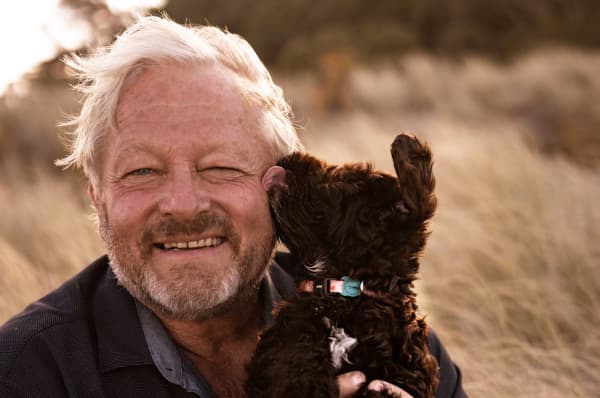
Animal behaviourist, trainer, educator and author Mark Vette.
Supplied
Most dogs, he says, are not aggressive, especially if they’ve been raised well and properly socialised during their critical early months (around two to four months old).
"The reason we have dogs in our community and our society is that they've co-evolved with us for 40,000 years," he says. "They've got the most subtle and social response to humans of any species."
That said, responsibility to ensure dog safety sits squarely with owners.
"The first responsibility of the owner is to know if their dog is showing threat signs, particularly so to kids, but to any people and or other pets or animals," Vette says.
That includes signs of predatory behaviour, chasing, or heightened arousal, particularly when multiple dogs are together. Predatory behaviour can make children be perceived as prey, he says.
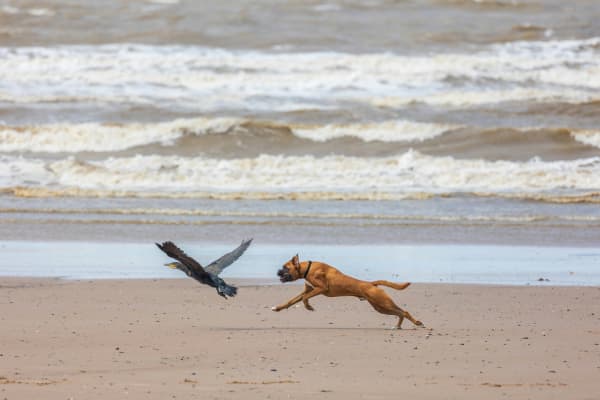
Dog owners need to take note of predatory behaviour and talk to a professional because behavioural issues can be treated well when dogs are young, Mark Vette says (File image)
Unsplash / Pete Godfrey
So how do we talk to kids about it?
SPCA senior science officer Alison Vaughan says instead of vague warnings like "be careful", which may cause more anxiety, give children simple behavioural rules:
- Don’t disturb a dog when it’s eating or sleeping.
- Don’t hug dogs.
- Always ask before patting a dog (and check with owner on the best place to do so).
Importantly, bites can happen in familiar settings — at home, with known dogs — during everyday interactions like hugging, climbing into a dog’s bed, or getting too close to their face, Vaughan says.
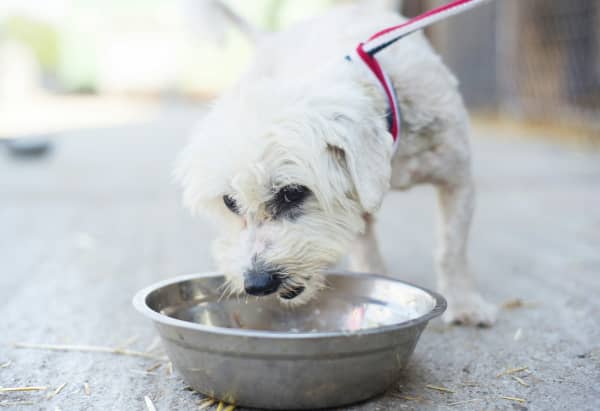
Tell your children not to disturb a dog when it's eating. (file image)
Unsplash / Getty Images
"For kids, really important when we're teaching them, [it is] less about spotting overt aggression and more about recognising signs that you should leave a dog alone and spotting signs they might be uncomfortable with an interaction."
And supervision is non-negotiable, even with the family pet, she adds.
What if they want to pet a dog?
Vette says children should:
- Always ask the owner before approaching – if they’re not around, don’t
- Avoid staring directly at a dog
- Never hug a dog around the neck, cheek or shoulders
- Avoid standing over the top of a dog
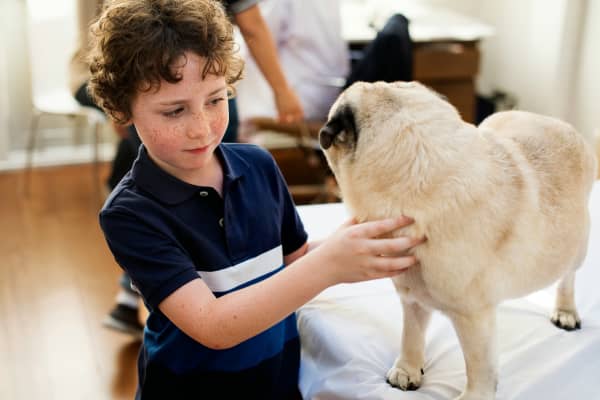
It's best to pet a dog under the chin or on the chest, Vette says. (file image)
Unsplash / Curated Lifestyle
If they do have permission to pat a dog, it’s safest under the chin or on the chest — not over the head or back.
SPCA says when you do pat a dog, use gentle, calm strokes that go in the same direction as their fur.
What if they want to avoid a dog
There are several reasons why a person may not want a dog around, Vaughan says, such as cleanliness or the dog being too excited.
Billy Douglas, founder of Lil Luka Dog Walks on Auckland's North Shore and in Whanganui, says she’s seen how parents' own fear of dogs can unintentionally rub off on their children too.
"For me, I've just never pushed. If a child is clearly very fearful of a dog, I've always just made sure that we walk [away]," she says, adding they predominantly keep dogs on a leash.
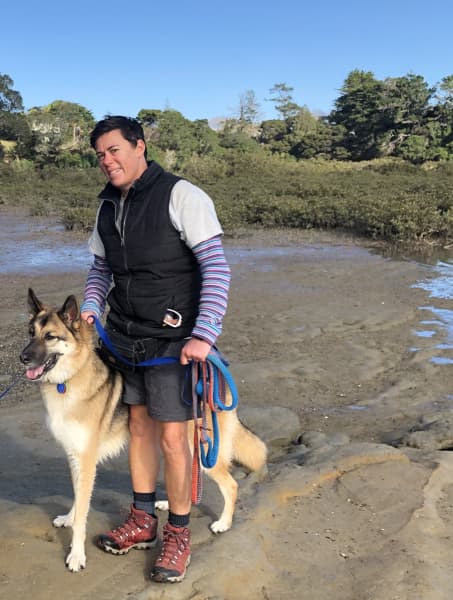
Billy Douglas, founder of Lil Luka Dog Walks, says it's important dog owners are mindful that not everyone loves dogs and to give people respect in shared spaces,
Supplied
Give space and acknowledge the child’s feelings rather than dismissing them, Douglas says.
Vette says if a child feels uncomfortable, teach them to:
- Stand still
- Keep arms tucked in
- Look slightly away
- Slowly turn their body to the side
- Move away calmly
"The more calm you can be, the better the dog's going to respond to you," Vette says.
Douglas agrees. Dogs can pick up on nervous energy so squealing or running is a bad idea.
"It's when little ones start breaking down and they start sort of dropping to the ground or really becoming visibly upset [or run away] … some dogs can see that as a vulnerable situation, and they start barking or reacting."
What are the red flags?
Vette has spent years teaching children how to read dog behaviour. He says owners can sometimes dismiss warning signs because they’re emotionally attached to their dog.
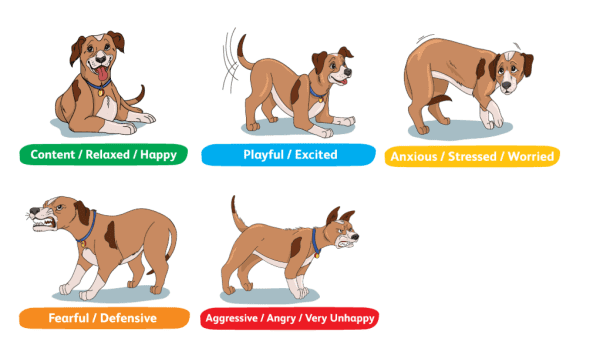
SPCA's website (kids.spcaeducation.org.nz) contains more information about what each dog behaviour might entail.
SPCA
Things to watch for include:
- Staring fixedly at a person, or eyes fixed and pupils dilated
- Ears tilted forward or back into the head
- Standing up tall (or crouched with weight back when defensive)
- Tail up (but can be curled down when defensive)
- A tense muzzle and snarling
- Raised hackles
And don’t assume a wagging tail means a happy dog, he says. It can also signal heightened arousal.
Why bites might happen
Many aggressive incidents, Vette says, happen when a dog feels its territory is threatened. In fact, most bites occur within about 80 metres of a dog’s home, he says.
The more serious, though rarer, cases tend to involve multiple dogs in a pack-like state of high arousal, Vette says. That can be the case especially in rural or semi-rural areas where dogs may be less socialised and more protective of their territory.
For example, dogs that regularly run fences barking at passersby are already displaying a red flag. If a gate is left open and they chase a cyclist or runner, the situation can escalate quickly.
"For dog control, that should be a zero tolerance situation," Vette says.
Sharing public spaces respectfully
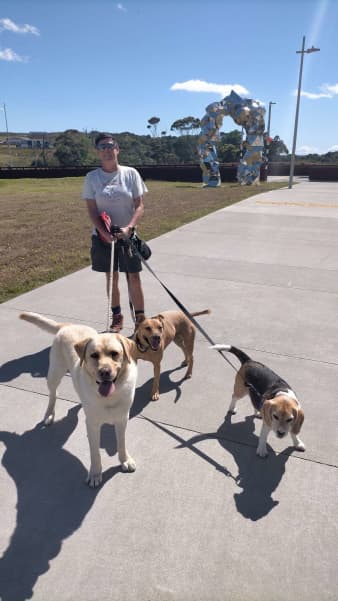
Billy Douglas says keeping dogs on a leash or within a 10m circumference of you and trained on command is important.
Supplied
In Auckland, council rules require dogs to be on leash in council-controlled places where they are permitted, including footpaths, unless signage says otherwise.
Douglas says respectful shared use of parks and beaches is essential. She stopped going to one beach after suffering abuse when she gently asked dog owners to keep their pets close by.
"Milford Beach is not a doggy daycare. Neither is Browns Bay or any public space. It is a shared public space.
"They must be under control when off leash, and when I'm talking under control, I'm not talking 100 metres up the beach, I'm talking 10 metres in front of or around a circumference and no more. We're not playing chuck-a-ball amongst everybody or around other dogs. We go and find a quiet spot."
She’s heard numerous stories of dog-on-dog attacks over her 11 years in business, including dogs being rushed by others that jumped out of cars or bitten at the beach.
Dog owners need to be mindful fellow pets may be recovering from injury, in training, still learning to socialise or rehabilitating from previous trauma, but having a child or another dog suddenly rush up to them can be detrimental, she says.
Not everyone loves dogs and not every dog wants to socialise, but everyone deserves to feel safe, she says.

