A tale of two waka
Every Waitangi weekend, Māori and Pakehā come together at the popular Lake Rotoiti Wooden and Classic Boat Parade.
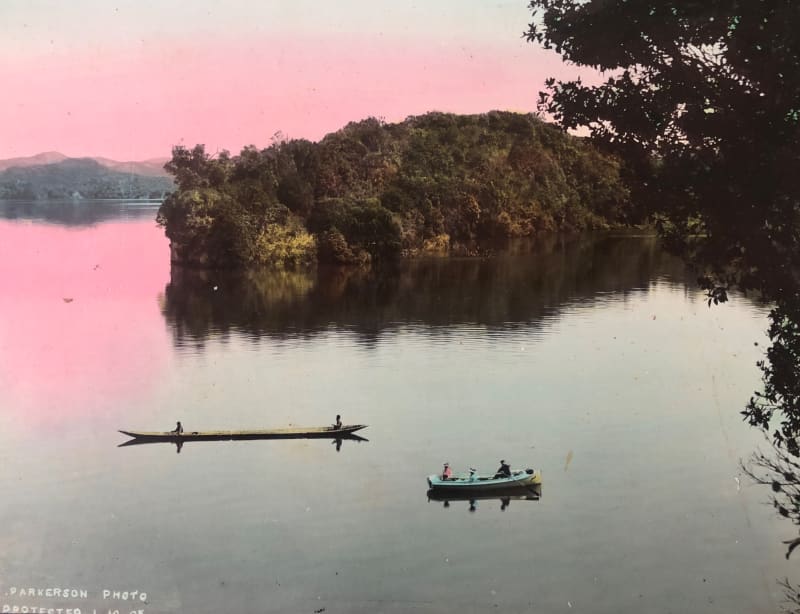
This is a story about two vintage wooden boat cultures, Māori and Pākehā, which come together every Waitangi weekend at the popular Lake Rotoiti Wooden and Classic Boat Parade.
It’s a story inspired by the 1911 hand-coloured photograph above, which was taken at Lake Rotoiti in the central North island by Rotorua photographer of the day C P Parkerson.
It was a time before Pākehā holiday homes on the lake. When simple wooden waka kōpapa carved out of totara logs - like the one pictured - were still common as a principal mode of transport. By the 1950s kōpapa were rare.
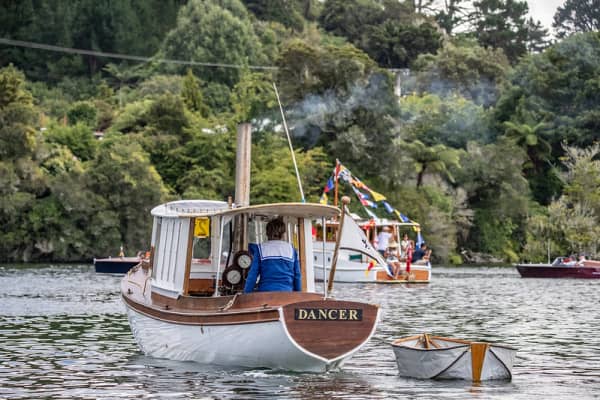
An image from the Lake Rotoiti Wooden and Classic Boat Parade.
Image: Scott Johnson

Tale of two waka
The culture around wooden boats is rich for both Māori and Pākehā at Lake Rotoiti - and both are under revival.
Every Waitangi for 28 years, the parade has gathered vintage wooden boats: dinghies, pleasure launches,steam boats, yachts, elegant 50s speedboats and - early prototypes of jetskis - hydrocycles.
The parade is the work of a key community organisation around the lake, the Classic Wooden Boat Association. Restoration of some seriously beautiful wooden craft having become a major part of contemporary lake culture. They follow in the wake of the wealthy families who built holiday homes here in the 1930s.
Local retiree Caroline Main - who lives a few bays along from the settlement of Ōtaramarae - recalls as a child when a visiting launch was the only contact they had with the outside world. Today having a stately wooden launch, ‘The Snark’, to sedately move around the lake is an important part of the Mains’ lives.
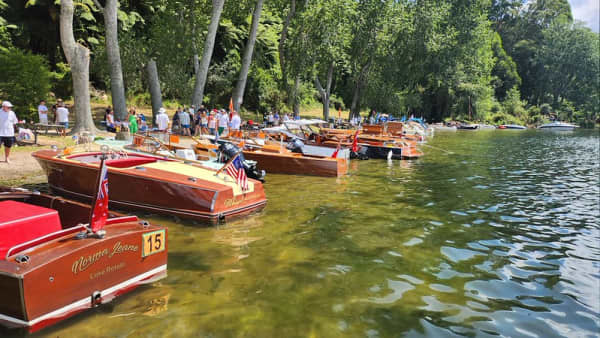
Lake Rotoiti Wooden and Classic Boat Parade
Image: Scott Johnson
The Rotorua region is our lake district, with a series of interconnected lakes and waterways. Long before roads and rail, waka plied the waters here on the state highway of its day, into the central North Island.
Rotoiti and nearby Lake Okataina were places renowned for waka carvers with Ngāti Tarāwhai a nationally recognisedcarving school and the great totara harvested from the forest, says Jim Schuster at Ruato on the lake. Schuster is an acclaimed marae restorer, and great-great-grandson of renowned carver Tene Waitere.
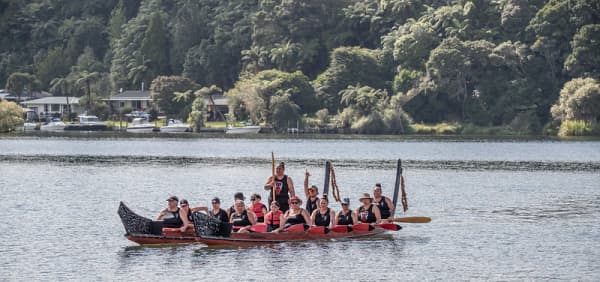
Waka Reremoana and Waimarie at the Lake Rotoiti Wooden and Classic Boat Parade
Image: Scott Johnson
In recent years the wooden boat parade is bringing together Pākehā and Māori, with two Te Arawa waka joining the flotilla.
While the the great Te Arawa waka taua (war canoe) often heads to Waitangi, says an organiser Eugene Berryman-Kamp, the paddlers are also practised to participate in waka tangata (“a people lover”) and waka tētē (fishing canoe).
Berryman-Kamp credits the rising popularity of waka ama with the young, since the 80s, as a big part of the revival of waka culture.
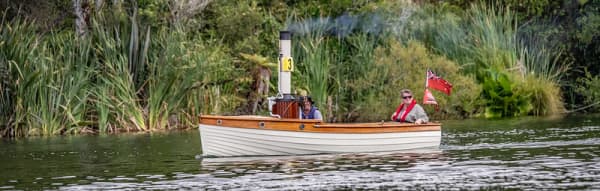
Lake Rotoiti Wooden and Classic Boat Parade.
Image: Scott Johnson

