When a Margaret Mahy classic mixes with raucous sea shanties
The West End, a chance discovery of a children's book and a night of raucous sea shanties in Wellington, inspired The Man Whose Mother was a Pirate.
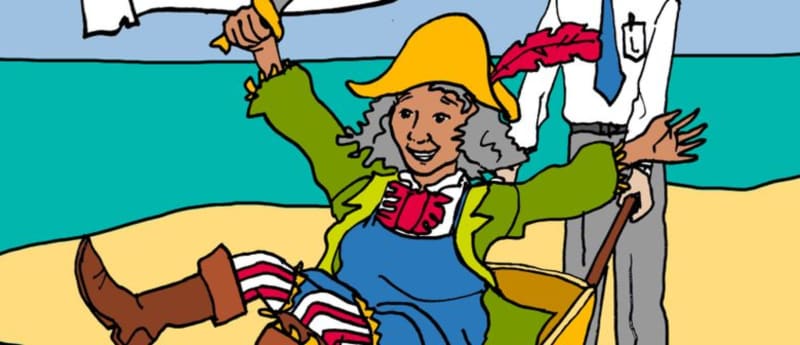
A happy collision of events came together to inspire Nino Raphael to create The Man Whose Mother was a Pirate - The Musical.
He and his partner were in London, gorging on theatre when they took in the Matilda musical, he told Culture 101.
“I was blown away by the production due to Tim Minchin's wonderful music. He writes great character-driven songs, that everyone can understand and relate to, children can understand what a Trunchbull feels like and what a brave Matilda sounds like and the sweet sound of a Miss Honey.”
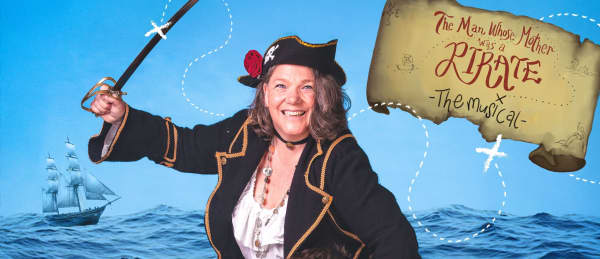
The musical The Man Whose Mother was a Pirate is based on a Margaret Mahy children's book.
Supplied
Next to him in that theatre, children in the audience were transported, he says.
“Just like shaking their seats with excitement and the parents of those children, massive smiles on their faces and for me I thought that's the future of theatre.”
From that moment the composer and vocal coach challenged himself to write a New Zealand musical for children.
Later he stumbled on the late Margaret Mahy’s famous book.
“I actually found The Man Whose Mother Was a Pirate, the book, in my Aunty's collection of children's books.”
He was, he says, “totally transfixed by it".
“I loved the simplicity of the story but the weight it carried of what it means to be, a young adult who believes that they have to stay the course and be a strong member of society and then is convinced by their piratical mother that they need to just drop it all, do the thing that is scary and go to the seaside.”
An evening of sea shanties at the Welsh Dragon pub in Wellington was the final thread.
“I was totally blown away by the atmosphere that was going on in there. It was a very diverse crowd of older men with big beards drinking Heinekens, there were families there and children with their parents.
“It was a very diverse and young queer crowd as well because since the Wellerman ['Soon May the Wellerman Come'] became popular and TikToks of sharing sea shanties during Covid was really big.”
During the chorus of sea shanty ‘Blow the Man Down’, the “whole pub erupted", he recalls.
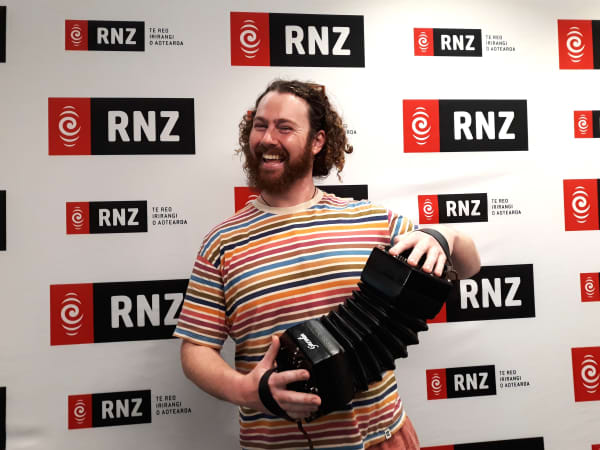
Nino Raphael.
RNZ
“It was just so heartwarming and incredible as a community musician and as a choir leader to see instant community coming together in a pub.”
That inspired his decision to make his musical interactive, capturing the community spirit embodied in group folk singing.
“Everyone loves sea shanties.” he says, and singing along sits at the heart of the show.
“As a choir leader I fully believe that art needs to be accessible for all and as a singer who's studied singing as a classical musician, as a classical singer, but grown up in community singing, I believe that singing is the quickest way that you can bring strangers and friends together to establish community.”
There is a reason why sea shanties are so catchy and a joy to sing.
“If you were to break down the musical side of it, they're always built on call and response, they are work songs, so they have action to them, they have a great sense of rhythm.
“If you're going to go ‘way hey, blow the man down,’ it comes with the same feeling as pulling a rope, pulling the ropes to set the sails.”
That mass audience participation in The Man Whose Mother was a Pirate has power, he says.
“You feel that you exist as a person doing that with ten people, 30 people, 100 people you feel a part of something that is whole, and music can touch people in such a way be it you're a listener, observer or a participant.
“Music is communication that's all we want to do as people."
The Man Whose Mother was a Pirate is currently on at the Hannah Playhouse in Wellington and runs till Sunday 14 December.
