Pūtātara: Revolutions in Māori Art
In Pūtātara: Revolutions in Māori Art, Matariki Williams and Jamie Tahana journey through the history of Māori art, starting at Ngā Puna Waihanga hui in Te Kaha in 1973. This landmark gathering of Māori artists set off a chain reaction of moments and movements around which Māori art has evolved and revolved ever since.
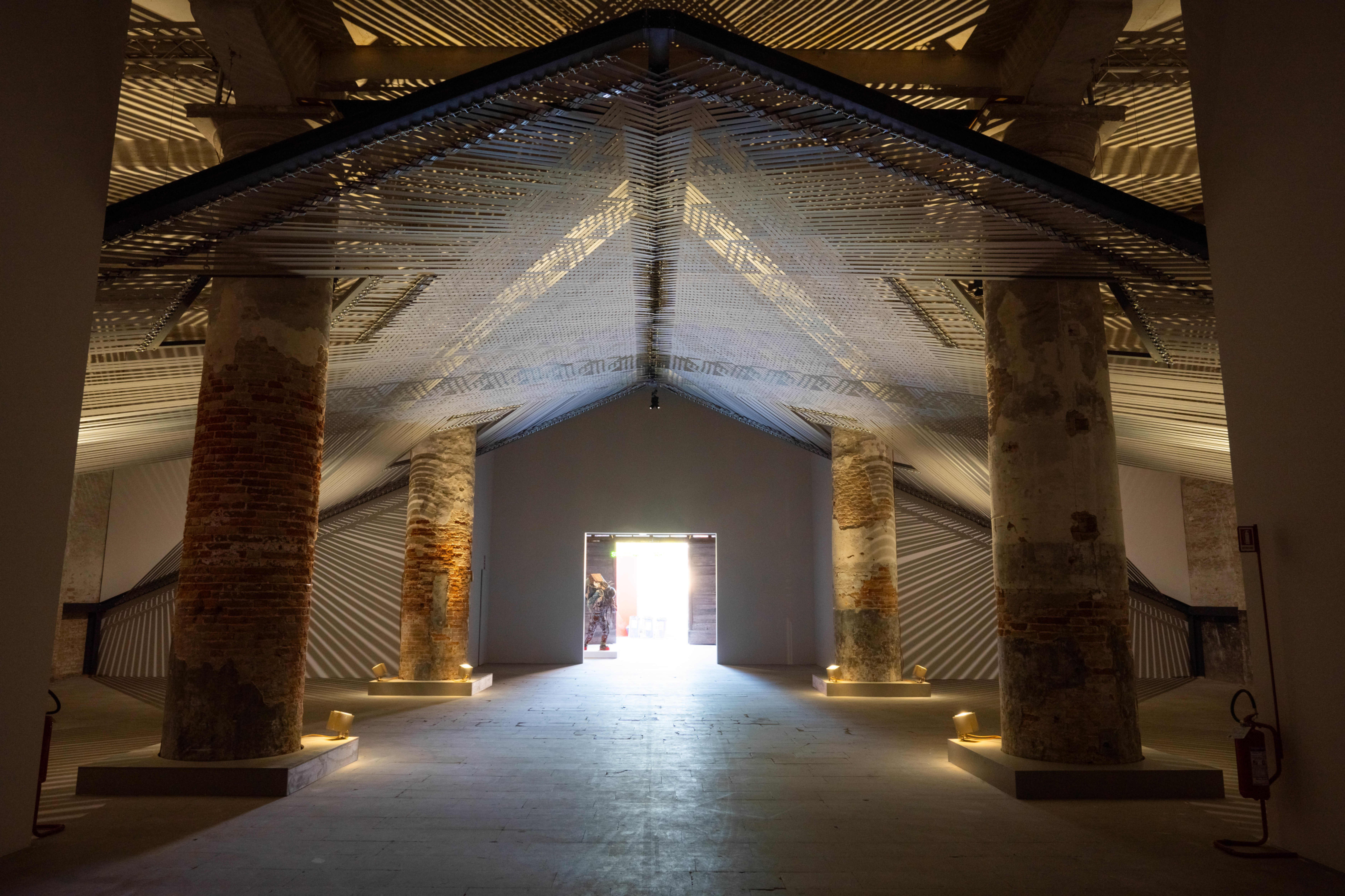
This image is Takapau (2022) by Mataaho Collective, winner of the Best Participant in the International Exhibition at the 2024 Venice Biennale. Credit: Ben Stewart.
RNZ Digital reporters
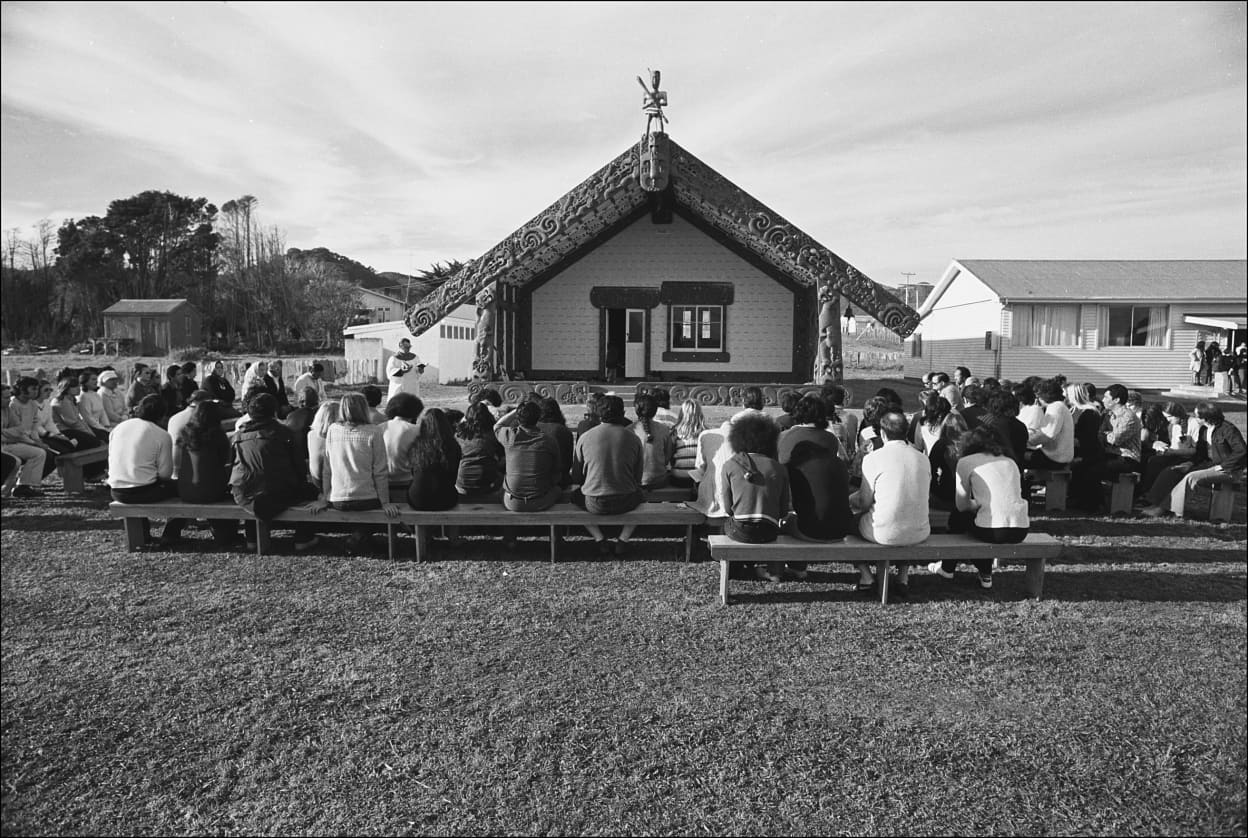
Morning karakia at Te Kaha-nui-a-Tiki marae in 1973 photographed by John Miller. Attendees of the first hui of the Māori Artists and Writers Society, later named Ngā Puna Waihanga, gather on the marae ātea.Image courtesy of John Miller
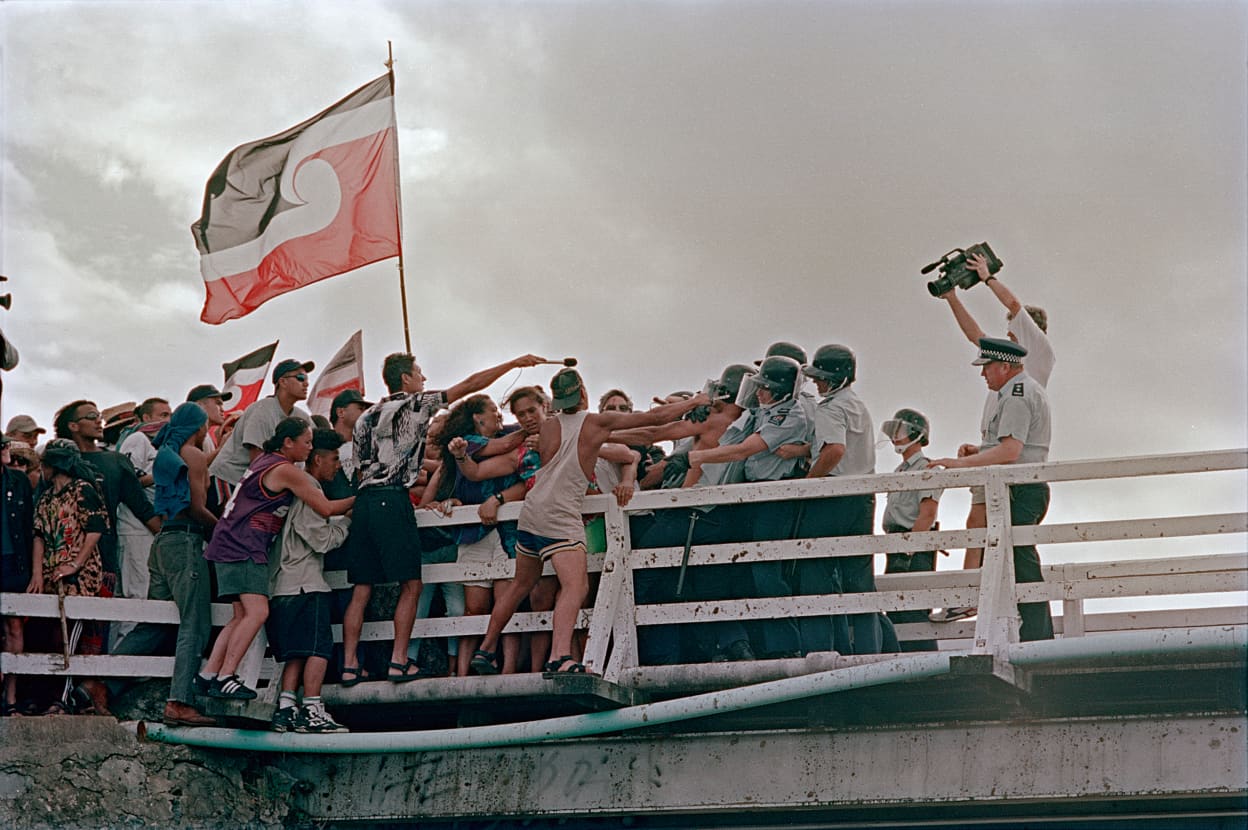
Protesters on Waitangi bridge clash with police, photographed by John Miller, 1996.John Miller
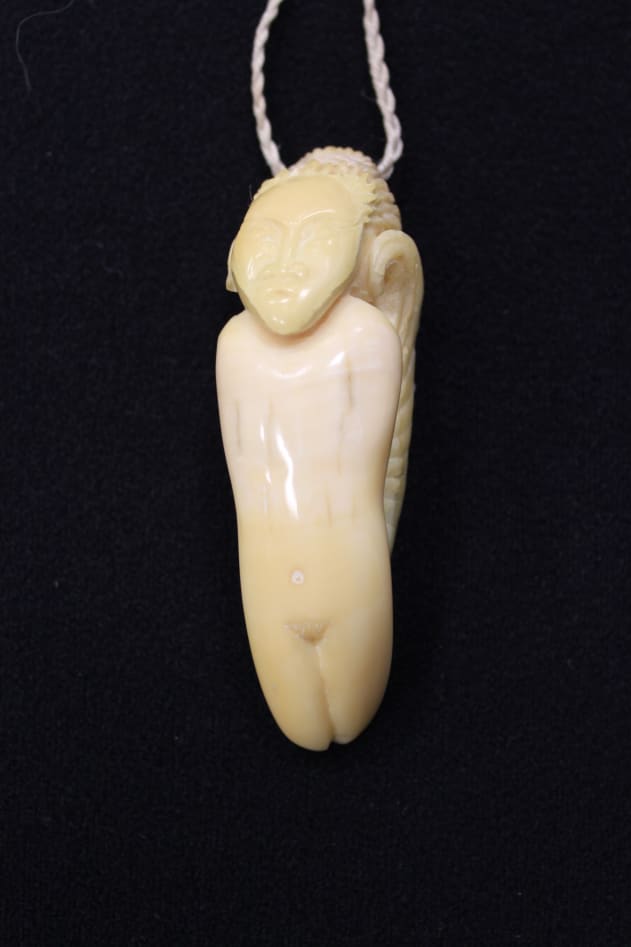
Rongorito carved by Te Aturangi Nepia-Clamp for Mina McKenzie. Depicting one of her tipuna, Mina was known to caress this taonga when ‘going into battle’.Te Manawa.
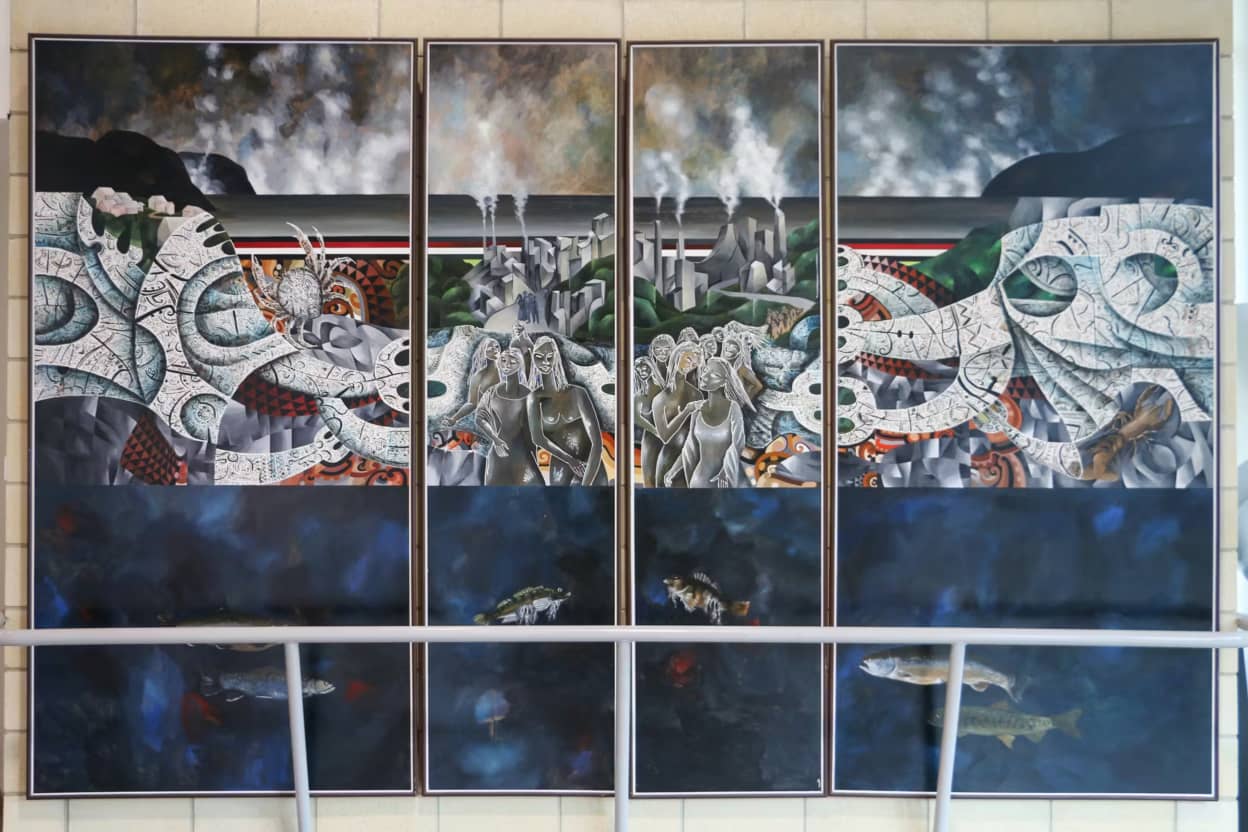
The Polluted Land by Buck Nin.Buck Nin’s whānau and Te Wānanga o Aotearoa
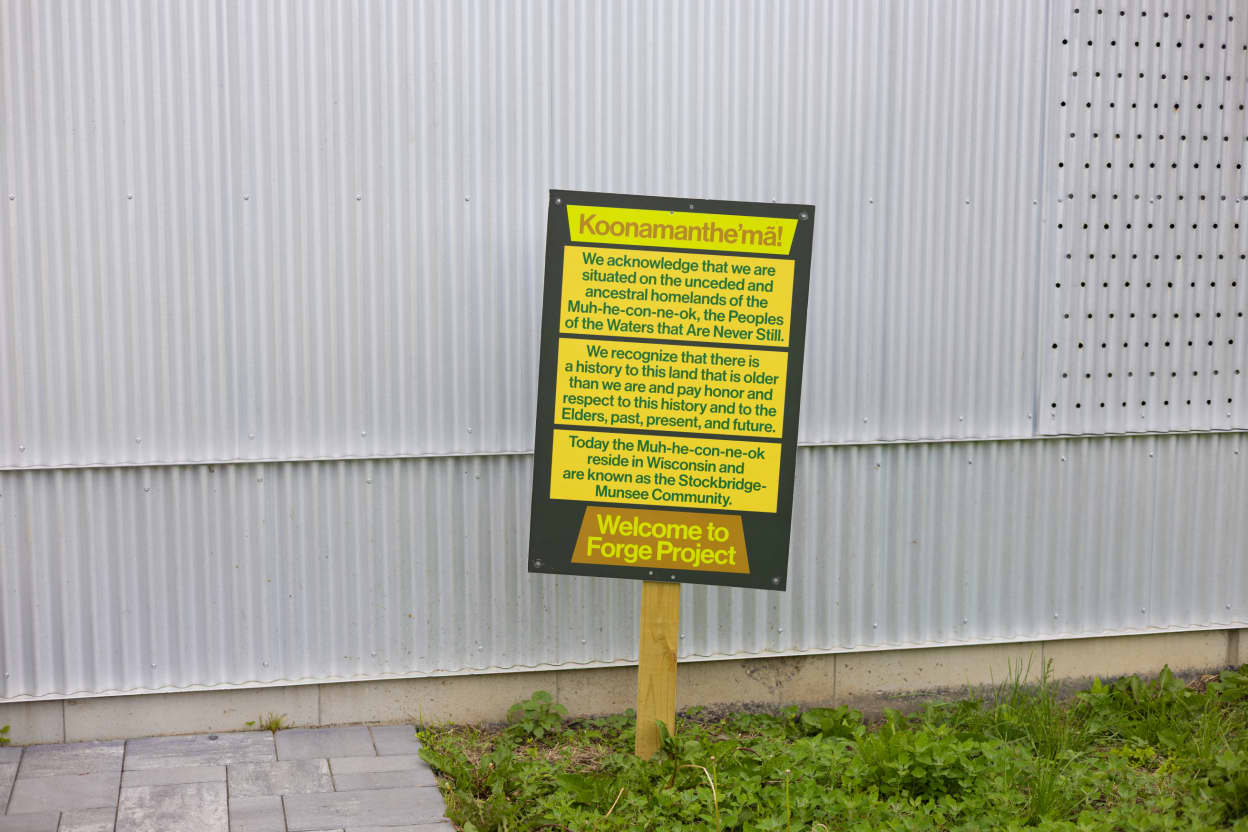
This photo was taken at Forge Project, a Native-led non-profit based in New York which advances Indigenous leadership in arts and culture.Taylor Galmiche
