'Good sleep' is the new flex for 2026
We've counted our steps and refilled our water bottles, but the latest metric to measure is ZZZs.
Brian Sciascia is all about measuring progress. As the owner of a Wellington gym, his days are spent encouraging people to keep tabs on their health and fitness choices. As the dad of a seven-year-old and a 10-month-old, his nights are all about sleep, or rather how much of it he's getting.
“A good night's sleep doesn't have to be hours. It has to be uninterrupted. Ideally a good sleep for me would be like a steady, not much interruption, for like seven-and-a-half hours.”
"Numbers orientated" Sciascia, 42, was gifted an Apple watch from his partner for his 40th birthday. He has always “sucked at sleeping” and sleep is the only thing he tracks daily on the device. It shows him nightly interruptions, and the “frustrating” fact that his partner falls asleep faster than him.
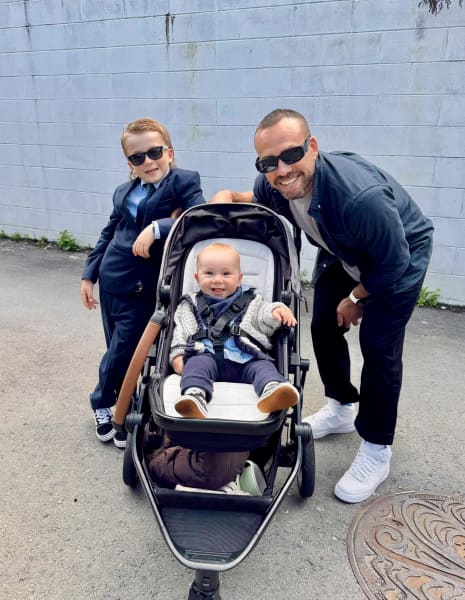
Brian Sciascia and his sons.
Supplied
“When I see something's working and I have proof of it, then it makes me happy. But also .. it does maybe drive up the anxiety a little bit, thinking, ‘f…, I only had three hours last night and seeing that, seeing the facts of it’.”
Ten years ago successful people used to boast about how little sleep they needed to do a good job. “The sleepless elite” , which included CEOs, politicians and historial figures, claimed to get by on just a few hours' shut eye a night.
Now, the pendulum has swung the other way and it’s a flex to get good sleep.
“In the last couple of decades, there was almost like this bragging thing of having little sleep,” says academic Matt Driller.
“But I think it's now swinging the other way where it's like, actually, that's not sustainable. For starters, that probably doesn't even happen. It's probably a lie.”

Prof Matt Driller, from the School of Allied Health, Human Services and Sport at La Trobe University.
Supplied
New Zealand-born Driller is a sports physiologist at Victoria’s La Trobe University. Fifteen years ago he started researching recovery in athletes at the Australian Institute of Sport. He swiftly realised things like compression suits and cold water immersion were a blip on the recovery radar compared to “the big rock of recovery, which is sleep”.
While his focus has been on sportspeople, he says the same outcomes apply to regular folks.
“The best way to think about it is that … if we're sleeping poorly it affects, almost every cell and process of our body so that becomes all kind of impaired.”
Auckland based hospital shift-worker, Kelly describes the effect of a poor night’s sleep as “walking through the fog”.
The 33-year-old exercises at a BFT gym most days around her unpredictable hours. She has worn an Apple watch for a year now and is adamant it inspires her to get a good sleep.
“I froth getting a good sleep score,” she says.
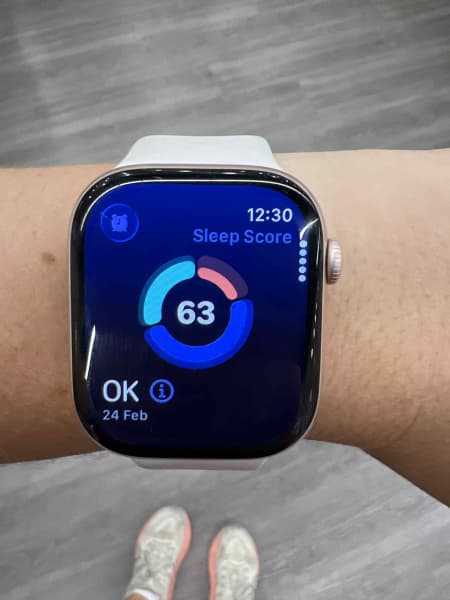
Kelly craves a good sleep score.
Supplied
“My goal is eight hours so my watch tells me off if I go to bed too late or wake up too many times.
“I don’t know if it’s psychological or not - but when I know I’ve had a bad sleep I feel trash. So then when I get close to my eight hours, I usually feel pretty good.”
The mum of two young kids says “more sleep” was one of her 2026 goals and “100 percent” a focus amongst her friends and colleagues as well.
“With the gym challenges and stuff, one of the goals is - get your sleep. And one of the things that will better me is sleep.”
She says clocking her sleep makes her more aware of it, and she does try and make up for a bad night (which can be tricky in shift work) by taking medication or sipping sleep tonics or teas.
The more research that is done in the area, the trendier it becomes to get good shut eye.
Popular exercise physiologist Stacy Sims says the importance of sleep has been picking up pace – and people are certainly talking about it in the way we have previously clocked things like 10,000 steps or drinking two litres of water a day.
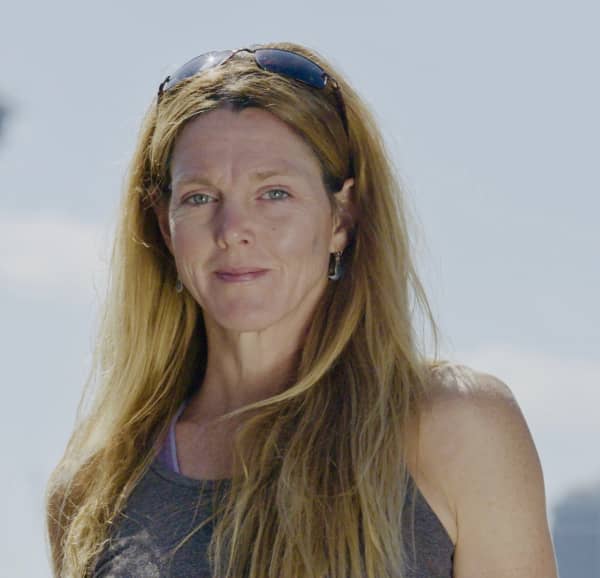
Dr Stacy Sims
Dr Stacy Sims
She says emerging research in how sleep affects brain health has fed the trend.
“It's now the badge of honour, the most amount of sleep and quality sleep.”
Both Driller and Sims say the rise in wearables like smart watches and rings has boosted desire for a “good night’s sleep”.
But Driller reminds these are just estimates (for now) as they don’t measure actual brain wave activity that shows deep sleep, light sleep or REM.
What’s all the fuss about sleep?
Sleep, Driller explains, is linked to tissue repair. For active people, that means muscle repair. For the general population, that means supporting immune function (you’re more likely to get sick if you aren’t sleeping well).
Sleep also affects our ability to learn and remember things. Not getting enough sleep means hormonal signalling gets out of whack, which can mess with stress hormones and cause a spike in the hunger hormone, ghrelin.
“So, the next day you're more likely to be hungrier but also crave more energy-dense foods, so you're probably more likely to overeat the next day if you haven't been sleeping well,” says Driller.
Sims says the brain can't "clean" overnight without good sleep. Instead, it will get that done in microdoses over the course of the day, which leads to fluctuations in energy, concentration and blood sugar.
A good night's sleep starts early in the day, say experts.
Getty Images / Unsplash
So how do I get a good night’s sleep?
Adults should aim for between seven and nine hours sleep, but that varies between individuals. (To figure out what works, consider how much sleep you need at night to wake up feeling fully refreshed, recovered and ready to go. That should get you close to your optimal hours, Driller says).
Sleep starts before you get into bed, Sims says.
She says we need to put more thought into getting into a parasympathetic state (that’s a place where you can rest and recover) during the day.
“Figure out when you're exercising and if you have a hard time sleeping then maybe you want to do some high intensity exercise in the late afternoon to draw your core temperature up. Because then when it drops again it signalling to your body, ‘hey, I'm preparing for sleep’.
“Or we look at, you know, having dinner at no later than 7pm so that you have that time to digest.”
Routine
Going to bed and waking up at the same time everyday builds a strong circadian rhythm, explains Driller. “I'm sort of talking like probably give or take 30 minutes. So if you usually go to bed at 10 at night try to go between 9.30 and 10.30 as a good place to start … If you can anchor your wake time to be even tighter, that helps.”
Light
When you wake up, get hit with bright, natural light within an hour to get the body going. “Sleep actually starts in the morning,” Driller says. “Go outside for a coffee or walk your dog or whatever, even if it's an overcast day, the light exposure is gonna be a better signal to your brain about ‘hey, it's morning time. Wake up, get moving.’ And that sort of starts this thing called ‘sleep drive’, which then builds throughout the day. And then the sleep drive gets so great that you need to fall asleep.”
Wind down
Men and women have different circadian rhythms, explains Sims. A woman will start to have her melatonin rise around 9pm and peak around 3am, and then it starts to drop off. For men, it's about an hour later.
That means women need to get to bed before that first spike in melatonin. “You don't wanna have dinner at 7 or 8pm because then you’re still digesting and it offshoots that melatonin peak… it’s about what are we doing in the afternoon to prepare our bodies to work with its natural rhythms for melatonin release for parasympathetic activation.”
Making up for a bad night
If it all sounds a little complicated – if you get the occasional night of crappy sleep – don’t lose sleep over it.
“If you get one bad night’s sleep here and there, which we all do, it will be ok, we can cope,” Sims says.
To try and undo the damage of a bad night, she suggests eating stacks of fibrous fruit and veg (like leafy greens, apples, pears and berries) and protein throughout the day.
Even if you can’t be bothered, try and do some easy movement. “Do incidental movement - parking further away from your office or making sure you get up from your desk. All those kinds of things. Just so you're moving, cause that's how we're able to clear our blood sugar, muscle movement is a big sync for blood glucose.”


