Can you donate your poo in New Zealand?
Even if public enthusiasm was high, the demanding and stringent donor process means only a select few can help advance this unusual but promising therapy.
Poo transplants may sound unglamorous, but researchers say the early evidence has been encouraging, and it’s grabbed attention around the world.
Nelson infectious disease specialist Richard Everts (of Richmond Health Centre) and researchers at Auckland’s Liggins Institute say fecal microbiota transplants (FMT) can help certain patients — yet finding eligible donors is rare.
Public interest is high. Liggins Institute professors Justin O’Sullivan and Wayne Cutfield, who were some of the early researchers in the field in New Zealand, say a public call for study volunteers would spark global attention. But enthusiasm alone isn’t enough. Donating is a demanding process, and only a small fraction of volunteers make the cut.
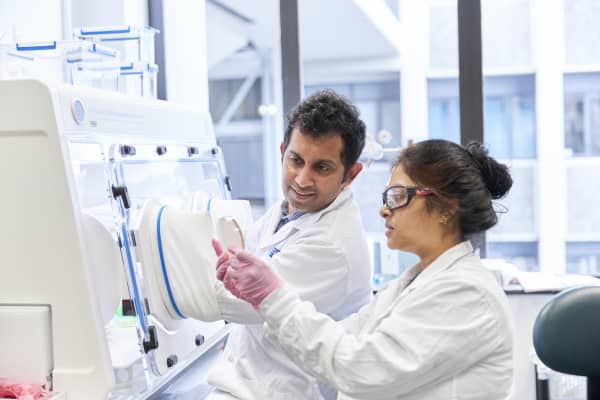
Liggins Institute researchers working in the lab that's undertaking studies into FMTs.
Supplied / Matt Crawford
“It’s a very awkward thing to find [poo] donors,” Everts says. Most of the time, he relies on a trusted donor contact list he’s built up over the years.
What are poo donations used for?
Everts says he performed New Zealand’s first hospital-based FMT in 2011, treating a teenager who had spent a year on daily antibiotics. After the procedure, the patient no longer needed them, he says.
Since then, Everts has carried out about 400 FMTs in hospitals and private practice, including for conditions like IBS and inflammatory bowel disease. Public hospitals, however, fund FMT only for recurrent gut infections such as C. difficile.
“The quality of the research and the amount of research doesn't yet put FMT in the list of treatments that the public system is willing to fund [for conditions beyond recurrent gut infection].”
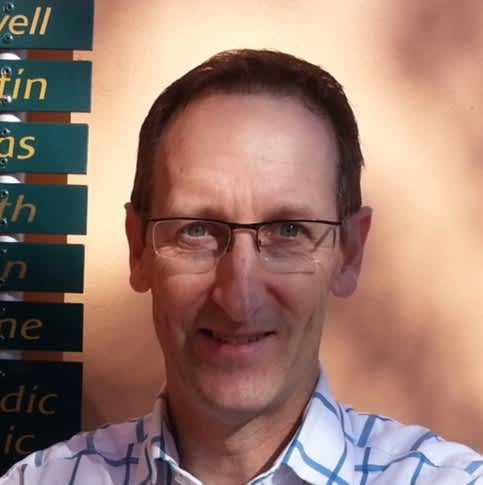
Richard Everts is based at the Richmond Health Centre.
Supplied / Richmond Health Centre
At the Liggins Institute, researchers have spent nearly a decade studying which specific bacteria drive benefits. Their findings are promising: a single treatment can shift a patient’s microbiome for years, they say.
But understanding exactly which microbes matter is tricky. An FMT contains around a trillion organisms from hundreds of species — the kind of diversity needed for patients with depleted gut ecosystems, Everts says.
To find a treatment option that can be upscaled, O’Sullivan and Cutfield are trying to move away from FMTs by developing a probiotic pill containing the potentially helpful bacteria grown in the lab.
“But the evidence that it does actually change something, that comes from an RCT [randomised controlled trials], and that evidence is the critical evidence you have to have in order to have confidence that what you're actually doing is going to make a difference,” O’Sullivan says.
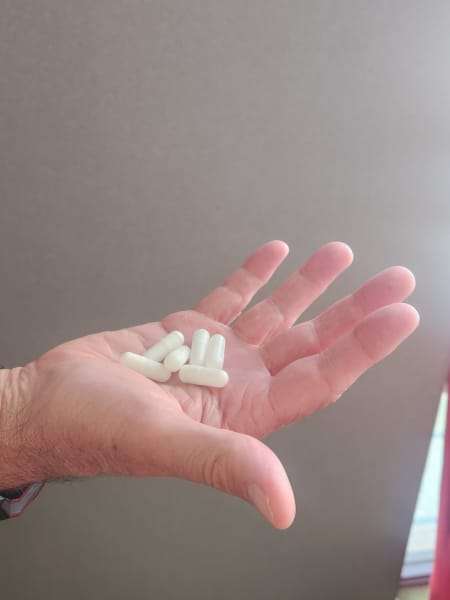
Liggins Institute researchers are developing probiotic pill in the hopes of replacing FMTs as treatment options.
Supplied / Liggins Institute
Who can donate?
Donor screening is intentionally stringent. Because the gut microbiome can transmit more than just helpful bacteria, conditions such as asthma, eczema, recent travel, medication, family medical history, body fat or even low fitness can rule someone out.
O’Sullivan and Cutfield have found only about 8.5 percent of volunteers qualified, and the full screening process can take a month. Samples must also be delivered quickly, while still fresh - so people have to live nearby.
Everts also finds it’s rare for potential donors to even get past that first hurdle of the questionnaire, let alone the following eligibility health checks.
When he first did FMTs, he would ask friends or family members of the patient and test them, but now relies on a trusted group of people as it saves thousands of dollars in testing and weeks of waiting for results.
“The other reason is that it’s best to use a donor who does not live in the same house and eat the same food as the sick person. The whole idea of the FMT is to give the patient new bugs.”

Liggins Institute director and molecular microbiologist Justin O'Sullivan and professor of paediatric endocrinology Wayne Cutfield.
Supplied / Liggins Institute
While he keeps a frozen “stool bank”, the Liggins Institute processes donations differently, extracting the bacteria and freezing them in two small, odourless and flavourless capsules kept at –80°C for up to six months.
“In other words, they're in suspended animation sort of and when you thaw them out, away they go.”
Can people apply?
The Liggins team recruits through targeted flyers. They have a “bank of donors” who get rescreened and bring new ones in batches periodically. Right now, they have enough material to last them until about April next year. They say expressions of interest may be made by emailing: gutbugs@auckland.ac.nz
There is a small financial compensation for the volunteers’ time, but most donors participate out of a desire to help, Cutfield says.
Everts is cautious about public advertising and doesn’t accept out-of-the-blue donor offers; he worries financial incentives could encourage people to hide important health information. Instead, he usually relies on a stable group of trusted donors but may seek some people out individually.
For now, FMT is available only by medical referral, and there are no public hospital donation programmes.

