Essential New Zealand Albums: The Warratahs – The Only Game In Town
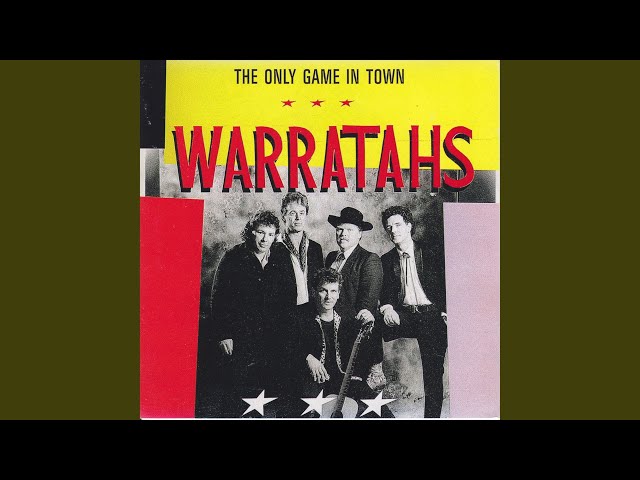
This 1987 album launched Kiwi country institution The Warratahs on a career that has spanned four decades.

Think about how a great album is made, and it's hard to escape the image of musicians notching up hundreds of hours of studio time crafting their masterwork, or engineers hunched over mixing boards, deliberating over every beat and chord.
Some albums are made that way, but it isn't the only way. The Only Game In Town by The Warratahs is one that could hardly have come together more quickly or simply.
What's interesting about that The Warratahs' debut album is that it wasn't originally intended to be an album at all.
The Warratahs – The Only Game In Town

The original Warratahs line-up. Left to right: John Donoghue, Wayne Mason, Barry Saunders (seated), Marty Jorgensen, Nik Brown.
Trevor Reekie Collection
Released in 1987, The Only Game In Town was the first album by a band that would go on to become a national institution, known for their tireless touring, much-loved songs and instantly recognisable sound.
Almost four decades on, The Warratahs are still making music, and in 2025 were given their rightful place in the New Zealand Music Hall of Fame.
But back when The Only Game In Town was made, no one was looking that far ahead.
In fact, when the Wellington group went into Radio New Zealand's Broadcasting House studios to make their first recordings, they weren't even sure they were making an album.

Barry Saunders performing with The Orange in Christchurch, 1969.
Kevin Hill
Since first getting together a year or so earlier, The Warratahs had been playing a weekly Thursday-night residency at the lower bar of Wellington's Cricketer's Arms Tavern, and they just thought it was time to hear what they actually sounded like.
The offer to record some of their material for a radio programme gave them that opportunity.
At a time when drum machines and synthesisers were starting to become common in local music, The Warratahs took a giant step in the opposite direction. Using mostly acoustic instruments, they essentially had the instrumental palette of a Hank Williams record from the 1950s.
Though they sounded like they had been playing this kind of music all their lives, individually, they came from a range of musical backgrounds.

Nik Brown playing with The Warratahs at a Hastings show in 1990.
Glen Moffatt collection
Violinist Nik Brown had been playing gypsy jazz with Hot Cafe. Bass player John Donohue had been with Loxene Golden Disc finalists Timberjack before making a pair of acclaimed solo albums as a singer-songwriter.
Barry Saunders had fronted rock bands in Christchurch and Irish bands in London. Wayne Mason was the keyboard player and main songwriter for '60s hitmakers The Fourmyula, and both he and Saunders had played electric boogie with Rockinghorse.
Rightly yet reliably supported by drummer Marty Jorgensen, who chose to play with brushes rather than sticks, it wasn't a sound that was especially fashionable. Even contemporary country music didn't sound anything like this.

But The Warratahs' music seemed to connect with a diverse yet enthusiastic crowd, which included ballet dancers, advertising agents and all types in between. It was hardly a formula anyone would have dreamed up on paper, yet Thursdays at the Cricketers added up to a real scene. Now it was time to see if the sound at the centre of that scene could be captured on tape.
Studio Two in Radio New Zealand's Broadcasting House was perhaps the finest studio in the country. With a floor space of 140 square metres, it was designed to accommodate a small orchestra or a live band.
At this point, the recordings were still destined for a one-off radio broadcast. It was only when the band got to hear the final playbacks that they started to think this could be something more.
Even then, The Warratahs had no record deal or label behind them. It was local fan, record retailer and former RNZ music producer John Pilley who put them in touch with Trevor Reekie, an old friend from school days, who was now running his own independent label, Pagan Records.
Through various line-up changes, The Warratahs would carry on through the decades that followed, with Barry Saunders and Nik Brown the two constant members.
They would write many more songs and make many more albums, arguably all more sophisticated than The Only Game In Town.
Yet listening to this album today, it's clear that this is where their identity was formed, and it remains a template and a touchstone for everything they have done since.
