Why did fashion make us so mad in 2025?
While fashion can be a source of pleasure, pain and humor, this year it was more likely to inspire something else: pure, unadulterated rage.
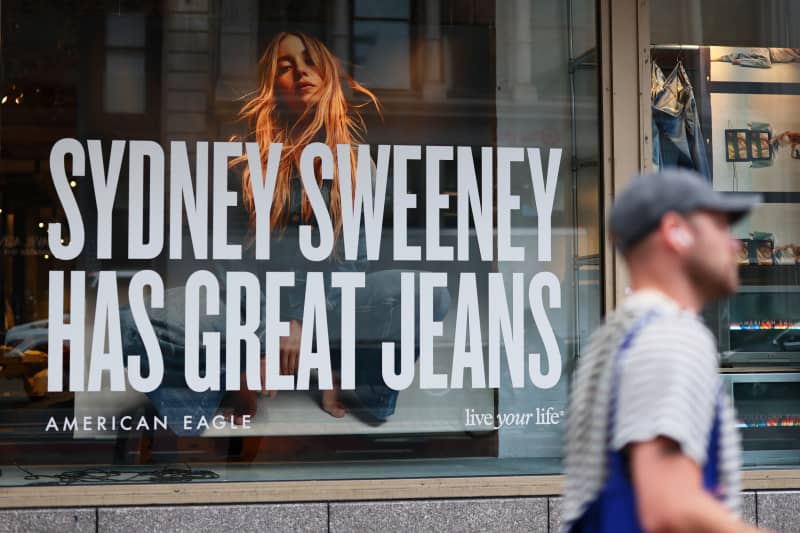
Fashion! A delight to the senses, a thing of beauty, a source of pleasure, pain and, in its determined ridiculousness, humor. But this year, fashion was more likely to inspire something else: pure, unadulterated rage.
Sydney Sweeney’s great jeans ad — or were they great genes?! — became a cultural firestorm so potent that President Donald Trump weighed in, praising the campaign on Truth Social as "the HOTTEST ad out there". Months later, Sweeney is still offering explanations in interviews, and one can't help but politicise her haircuts and clothing choices.
Dutch indie designer (and, in the months since, the head of Jean Paul Gaultier) Duran Lantink's hilariously realistic top made of jiggling oversized breasts, worn by a male model at Paris Fashion Week in March, was so hotly debated that former Fox news anchor Megyn Kelly dedicated a segment of her podcast to dissecting the look.

At Paris Fashion Week, models walking the Duran Lantink runway show wore prosthetics in the form of chiseled abs (pictured) and bouncing breasts.
AFP / Bertrand Guay
"There are always going to be mentally deranged people in our society," she said. "And then there will be equally cynical advantage takers, like the designers behind this whole thing. The only solution for the rest of us is to say no, call out the depravity, and register how gross we find it. That's all we can do — or we’re going to lose everything to these people."
Kelly may be provocative, but almost anyone discussing fashion in 2025 approached it with an attitude that everything is at stake. Seemingly innocuous moments of sartorial froth, like paparazzi shots of Ryan Murphy's forthcoming American Love Story series on Carolyn Bessette Kennedy and John F. Kennedy, Jr., led to multi-day debates, as TikTokkers attempted to lay claim to their ultimate authority on the late Bessette Kennedy's precise style.
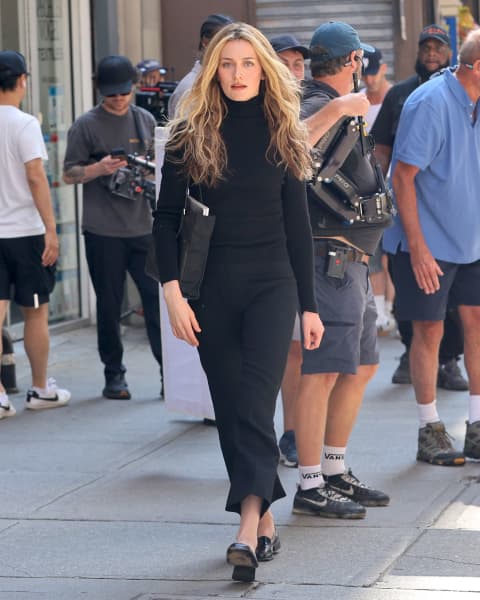
Images of Sarah Pidgeon as Carolyn Bessette Kennedy unleashed fresh debate over the late icon's style.
Jose Perez / Bauer-Griffin / GC Images / Getty Images via CNN Newsource
Kylie Jenner fronting a Miu Miu campaign raised questions over whether the pop cerebral brand had dumbed itself down. And The Row, the understated American label helmed by publicity-shy sisters Mary-Kate and Ashley Olsen, saw its ethos of quietude turn on itself when a longtime customer, influencer Neelam Ahooja, wrote a Substack post in late October “breaking up” with the label.
Even talking about fashion became a font for rage bait, when designer Edward Buchanan posted an Instagram plea during the Spring-Summer 2026 Paris Fashion Week shows, asking social media commenters to accord designers more respect: "I have read some really heinous comments about the work of many designers in these last few days….Please bring some intelligent criticism to the table otherwise it's just a troll fest from the comfort of your homes."
That spiraled into a heated debate over who gets to critique fashion shows at all — do you need to be an expert in the room, or is it just as valid to weigh in as an observer whose platform is social media, even if the stage is just a brand’s comment section?
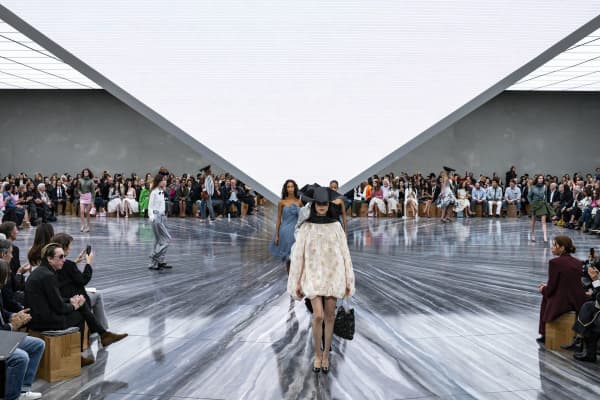
This season's slate of designer debuts — from Dior, above, as well as Chanel, Bottega Veneta, Jean Paul Gaultier and more — inspired heated conversation over the quality of designer fashion and the very nature of fashion criticism.
Victor Virgile / Gamma-Rapho / Getty Images via CNN Newsource
Fashion is the cradle of trend making, so all this may not be surprising given that Oxford University Press's word of the year was "rage bait": content that is explicitly designed to incite outrage. Even if designers (or brands, editors, commentators or celebrities) are just trying to be cheeky or merely delivering what they believe their public wants, we can't help but respond with sustained exasperation.
Skims's merkin thong — a thong with a pubic wig, little more than a cheap publicity stunt — made us question the nature of nudity, even though the product did little to warrant such discourse. The Sánchez-Bezos wedding became a referendum on the tastelessness of today's billionaires, as critics expressed revulsion at Lauren Sanchez's Vogue magazine cover, yet scrambled to read and dissect it.
Over the past decade, the industry has undergone unprecedented change as it faced accusations of cultural appropriation and a lack of diversity – charges that often began on social media. There was a sense, among fashion fans, that speaking out against a brand or powerful fashion figure could lead to change; after all, fashion practically invented cancel culture.
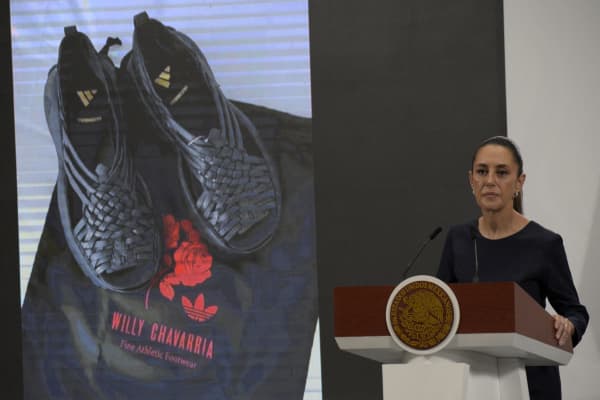
Mexican President Claudia Sheinbaum Pardo accused Adidas of cultural appropriation over the design of a new shoe earlier this year. Mexican-American designer Willy Chavarría acknowledged the inspiration behind the design and formally apologised.
Luis Barron / Grupo Eyepix / NurPhoto
But you might also say that was also a period of extraordinary creative freedom. Fashion enmeshed itself with Instagram, as brands began staging shows explicitly to create social media moments, from more obvious gimmicks like Coperni's spray-on dress, to more sophisticated efforts like Balenciaga's blizzard show, in which then-creative director Demna sent his models down the runway in a raging artificial snowstorm, with trash bags as purses. These spectacles invited everyone to participate in fashion week viewing, which had previously been purposefully exclusionary. Many commenters claimed that Demna was glamorising the refugee crisis with his show, but such assessments rarely became all-out controversies.
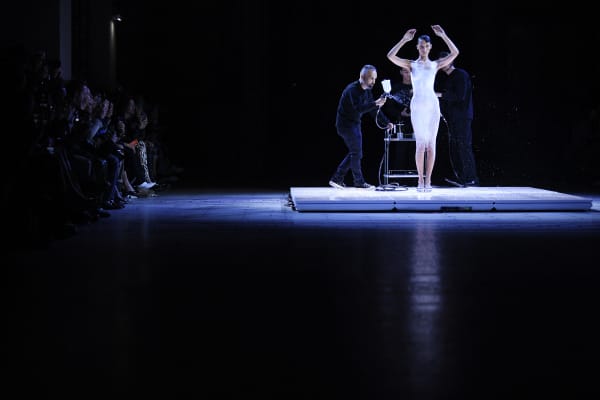
US model Bella Hadid is dressed by spraying Fabrican Spray-on fabric during the Coperni Spring-Summer 2023 fashion show as part of the Paris Womenswear Fashion Week, in Paris, on September 30, 2022.
AFP / Julien De Rosa
That changed when Balenciaga was accused in late 2022 of sexualising children in a pair of controversial ad campaigns. Suddenly, fashion was in conversation with a larger, politically-charged culture that was racing to out-debate itself.
Demna apologised for the images, some of which featured children holding teddy bear bags dressed in what looked like BDSM-inspired outfits, saying in a statement, "I want to personally apologize for the wrong artistic choice of concept for the gifting campaign with the kids and I take my responsibility. It was inappropriate to have kids promote objects that had nothing to do with them."
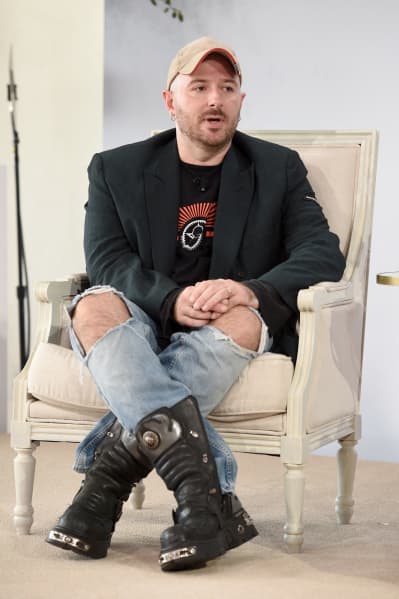
Balenciaga creative director Demna Gvasalia speaks onstage during Vogue's Forces of Fashion Conference at Milk Studios on 12 October, 2017 in New York City.
Dimitrios Kambouris / GETTY IMAGES NORTH AMERICA / Getty Images via AFP
You might say that's when social media began its evolution from an image-driven medium to one propelled instead by the exchange of ideas. You no longer post to Instagram or TikTok to sell the dream of your aspirational life; you post because you have something to say. Many fashion figures and influencers are now migrating from Instagram to Substack, where arguments and theories, rather than selfies, are the currency.
Will 2026 see a different kind of discourse? Creator Ryan Yip shared a diagnosis: fashion zoochosis. "We desire freshness and therefore we induce freshness," he explained on Instagram.
"Because whatever brands are putting out is not stimulating us, we create the stimulation ourselves," Yip told CNN. "We might try to start an argument, we might be more inclined to be contrarian, just so we can debate about something because, Oh, my god, I'm so bored."
Perhaps moving beyond fashion's obvious algorithmic moments — focusing on exploration and curiosity rather than outrage, as well as on smaller designers or figures who aren't begging for attention — would get us somewhere more interesting. Here’s hoping we can break out of the zoo.


