


Martial arts are deeply familiar for many Chinese people.
The legendary heroes that starred in wuxia novels and TV dramas - leaping across rooftops, taking on multiple opponents and moving with effortless grace - were once idols for countless fans.
Thanks to kung fu stars such as Bruce Lee and Jackie Chan, Chinese martial arts has grown in popularity over the past half century.
Boasting a long history, Chinese martial arts originated in primitive society out of the need for hunting and combat, later evolving into fighting techniques.
According to a book titled History of Chinese Martial Arts, martial arts began in the pre-Qin period, developed through subsequent dynasties and reached a peak during the Ming and Qing dynasties.
Based on its technique, regional origins and lineages, martial arts were further divided into various styles.
In addition to more established traditional schools such as Shaolin, Wudang, Emei, Taiji, Xingyi and Baguazhang, several southern styles that have gained popularity in the modern era - namely, Wing Chun and Hung Gar - have also become increasingly recognised worldwide, partly due to their prominent use in television and cinematic blockbusters.
Not surprisingly, Chinese martial artists eventually made their way to New Zealand.
Not only do they teach martial arts techniques, but these individuals also promote the culture and spirit of martial arts to a younger generation of Chinese as well as people from other ethnic backgrounds.
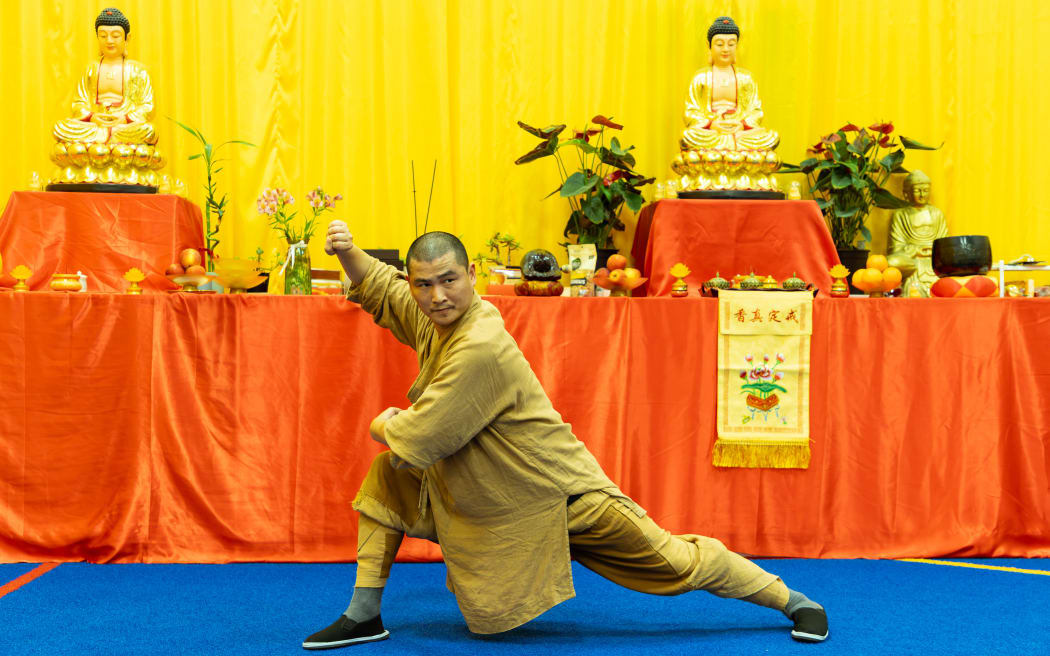
Yanzi Shi from Shaolin Temple of New Zealand Photo: RNZ / Yiting Lin
'All martial arts under heaven originate from Shaolin'
In the Dunrobin Place commercial area of Half Moon Bay in Auckland's eastern suburbs, the Shaolin Kungfu Chan Temple of New Zealand is surrounded by a variety of restaurants and shops.
Although this Shaolin temple was established only two years ago, the original Shaolin Temple on Songshan Mountain in the Chinese province of Henan dates back to the 19th year of the Taihe era of the Northern Wei Dynasty (495 AD), with a history of more than 1000 years.
Inside the Half Moon Bay temple, children and adults in loose red and black training uniforms can be seen doing flips, running, jumping or stretching.
Shi Yanzi, who trained at the Shaolin Temple on Songshan Mountain for about 30 years, offered guidance and assistance at times.
"We often hear the saying, 'All martial arts under heaven originate from Shaolin'," Shi said.
"From a historical perspective, Shaolin kung fu actually gathers the strengths of many different styles into a concentrated essence. … Shaolin martial arts unify and promote these techniques, which is how the saying 'All martial arts under heaven originate from Shaolin' came about."
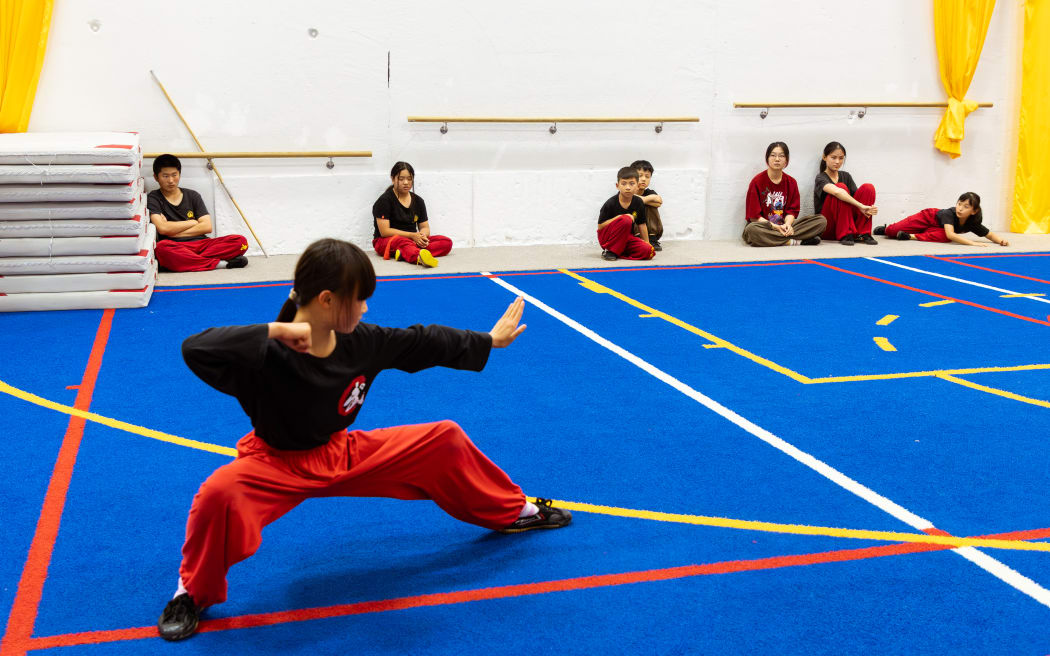
A child practices under the watchful eye of Yanzi Shi. Photo: RNZ / Yiting Lin
In addition to the traditional Shaolin styles of Xiao Hong Quan (Small Hung Fist) and Luohan Quan (Arhat Fist), Shi has also studied some animal-style forms, such as Leopard Fist and Eagle Fist.
However, he said that Shaolin kung fu was not merely an external display - it was fundamentally about internal virtues.
"Our Shaolin kung fu integrates the philosophy of Chan Buddhism, which is the biggest difference between Shaolin and other martial arts. The practice expresses a combination of internal cultivation and external technique," Shi said.
"Internally, we emphasise 'to practice martial arts, first cultivate virtue'. After cultivating virtue, we also purify the mind, using meditation to complement martial movements. Through this process, a lasting form of training is developed, and the phenomena created through this practice are what we call 'kung fu'."
Currently, about 15 adults and nearly 100 children are learning Shaolin kung fu under Shi.
Shi teaches younger students traditional basic exercises such as horse stances and headstands, as well as punches, palm strikes, kicks, leg flicks and the 13 fundamental Shaolin routines.
The curriculum for adults was similar but, because their waists and legs were less flexible, it typically took them longer to grasp the basics, Shi said.
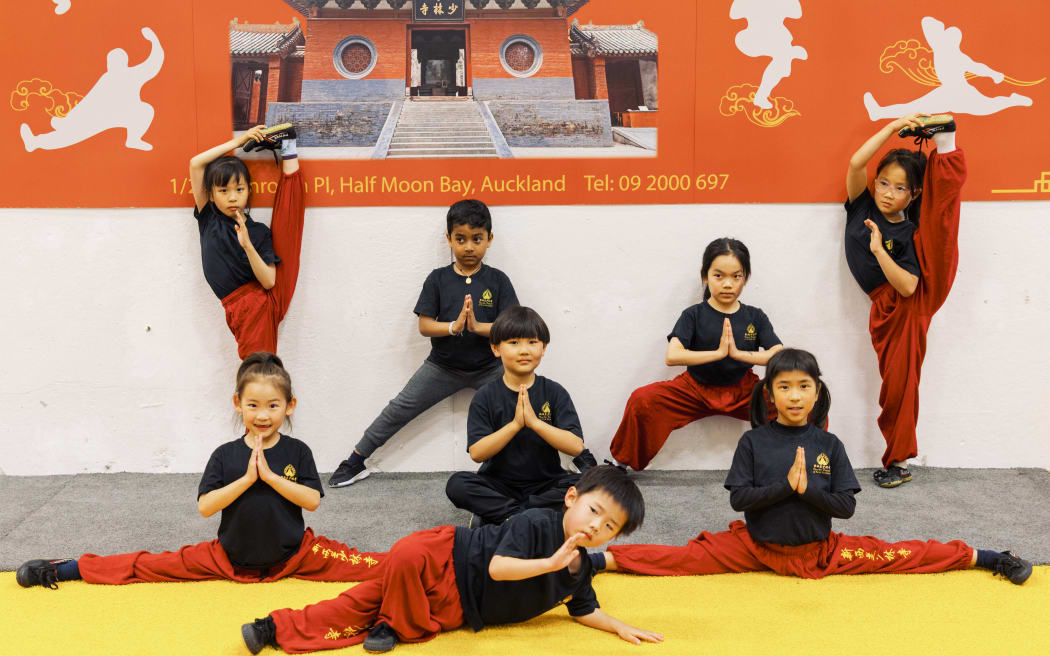
Children at the Shaolin Temple of New Zealand. Photo: RNZ / Yiting Lin
"Learning kung fu is a process of enduring hardship. It's a way to continuously strengthen your mind, body and spirit," he said.
"We have a spirit called 'fearlessness'. When students begin, they don't have this spirit or mindset. You need to encourage them and guide them, helping them persevere.
"When parents see their children's progress, their mental and physical growth, how they gain confidence and vitality, and how they become more caring towards other children at school … the kids feel they've found their own value, and that's very important."
Shi, who has also taught in Australia, hoped Shaolin culture could flourish throughout Oceania.
"I hope that everyone - whether they already know about Shaolin kung fu or not - can, through the gradual development of our Shaolin Temple, feel the charm of Shaolin culture, learn our martial arts or come to understand our Chan Buddhist philosophy. This has always been my goal."
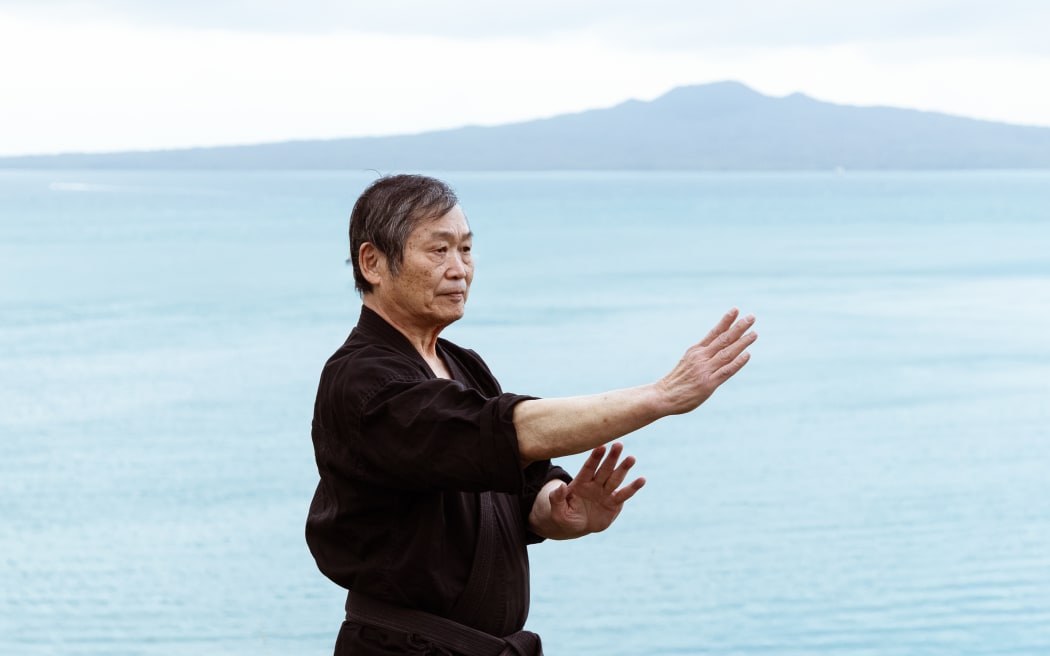
Bruce Cheng has been teaching Wing Chun in Auckland for more than 30 years. Photo: RNZ / Yiting Lin
'Definitely practical'
Kung fu superstar Bruce Lee rose to fame in the 1970s, showcasing the artistry of Chinese martial arts to the world.
As a young person, Lee studied Wing Chun under legendary master Ip Man, laying the foundation for his own martial arts system.
Lee's later creation, Jeet Kune Do, was also deeply influenced by Wing Chun.
In more recent times, the Ip Man film series has introduced Wing Chun to even more people, sparking widespread interest in the discipline.
There are many legends surrounding the origin of Wing Chun, but it is generally believed to have emerged in the late Ming and early Qing dynasties.
During this period, a Shaolin nun named Ng Mui passed her martial arts knowledge to a disciple named Yim Wing Chun, from whom the style takes its name.
Legend has it that Yim Wing Chun then taught the art to her husband, and subsequently it was passed on to family members and other students.
By the late 19th century, Wing Chun master Leung Jan taught the style to Chan Wah Shun in Foshan, Guangdong province.
Chan's disciple, Ip Man, later popularised Wing Chun in Hong Kong and beyond.
Bruce Cheng from Taiwan, a disciple of Ip Man's student and nephew, Lo Man Kam, has been teaching Wing Chun in New Zealand for more than 30 years since immigrating.
Now 75 years old, he continues to pass on his knowledge.
The number of his students grew from just over 20 initially to around 300 at the peak, coinciding with the release of the Ip Man film series.
His martial arts school also expanded across various districts in Auckland, with students also even establishing branches in Hamilton and Australia.
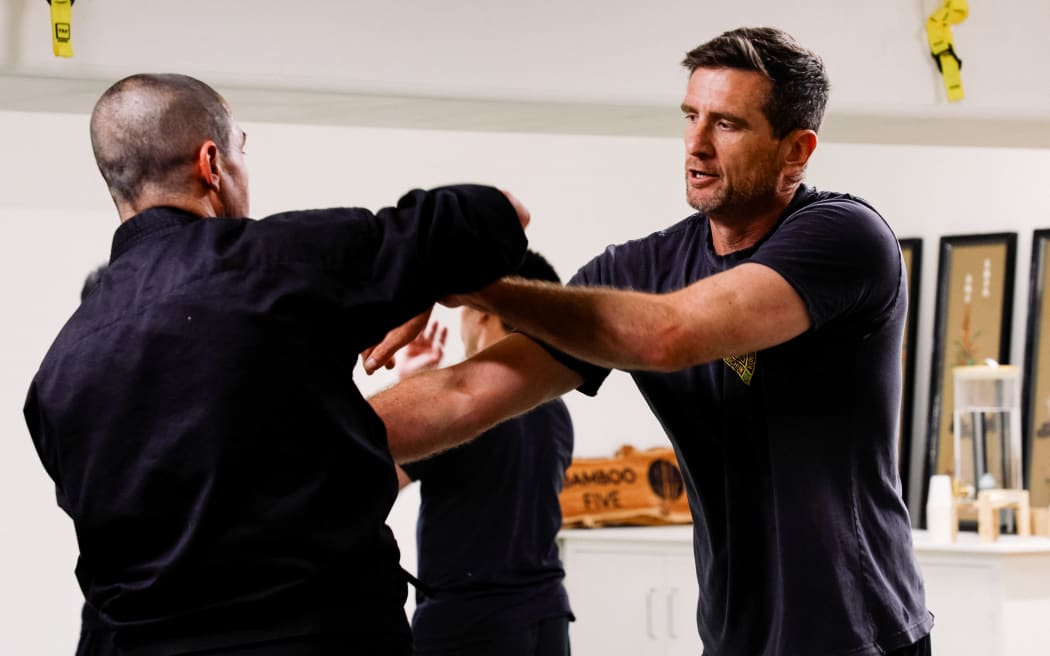
Tim Clayton trains with a partner. Photo: RNZ / Yiting Lin
Cheng said Wing Chun techniques were simple and practical, and yet still required long hours of dedicated practice.
"You see them practicing chi sau (sticking hands) … it's all based on feeling," Cheng said.
"When you make contact, you have to sense where their hands are going, how to respond and how to control them. It all comes from that feeling, and there's no time to think - just a fraction of a second."
Learning martial arts not only strengthened the body but also allowed one to protect themselves and others, he said.
Cheng said he had already prepared successors, so his students would be able to continue passing on Wing Chun in New Zealand once he retired.
"This is a part of our Chinese traditional culture," he said. "It can't stop here. It has roots."
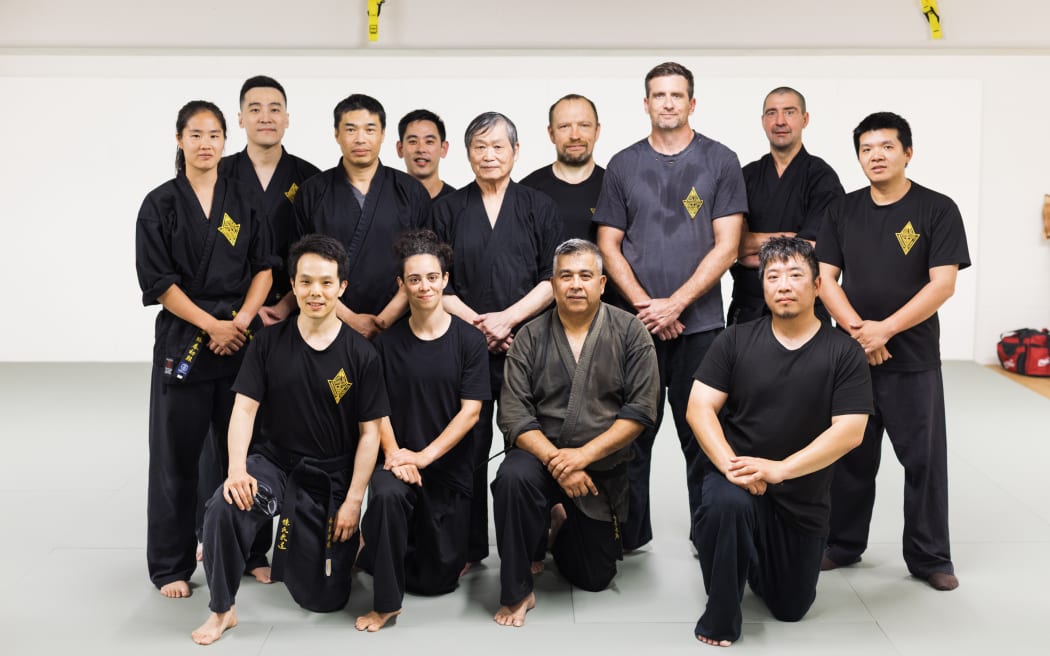
Bruce Cheng and his students Photo: RNZ / Yiting Lin
Tim Clayton, who is nearing 50, has been practicing Wing Chun under Cheng for more than 20 years.
Clayton was first introduced to Wing Chun through the influence of Bruce Lee.
"Everyone grew up watching kung fu movies and stuff," he said. "Everyone thought that they were cool for my generation."
He said that although practicing martial arts is tough, he encouraged everyone to give it a try.
"I think it doesn't matter how big or small you are," Clayton said. "It's for anyone - man or woman, doesn't matter.
"It's not an attacking style, so you have to literally have someone attack you to be able to use it properly.
"It's very good like that. It's not an aggressive form, but it's definitely practical."

New Zealand Kung Fu Wushu Federation president Glen Keith at the 2025 New Zealand National Kung Fu Wushu Championships. Photo: RNZ / Yiting Lin
'Commit yourself to the art'
New Zealand Kung Fu Wushu Federation president Glen Keith is a martial arts enthusiast.
Inspired by Bruce Lee movies, Keith developed a strong interest in the sport.
At the age of 15, he found a martial arts teacher in his hometown of Wellington and began learning a style that combined karate with Chinese kung fu.
Eight years later, he became a disciple of Young Wing Koi and started learning Shaolin Fut Gar Kuen, relearning Chinese kung fu from the fundamentals - walking, breathing, balance and power.
"It's a Cantonese southern style, but it originated from the Shaolin Temple in the north. When the temple was invaded under a revolution, a number of masters fled to the south and they established themselves there," said Keith, 69.
"The systems they developed were a combination of northern and southern, so my system is both. It's also internal and external, so there's a lot of qi gong/tai chi kind of moves but also external energy."
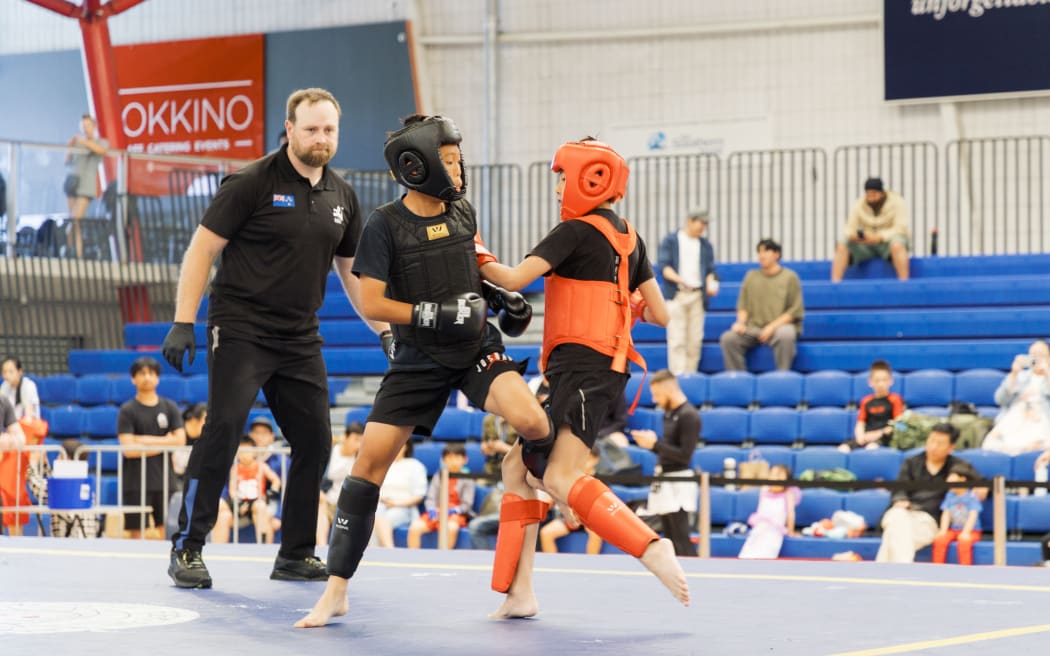
The sanda (Chinese kickboxing) competition at the 2025 New Zealand National Kung Fu Wushu Championships. Photo: RNZ / Yiting Lin
In 1990, Keith was the sole New Zealand delegate at the inaugural congress of the International Wushu Federation in Beijing.
At that time, only one Chinese martial arts association existed in New Zealand - the Wellington Region Chinese Martial Arts Association, and Keith was the only European member.
"What I saw created a vision in my head that's been with me all the way through," Keith said.
"I knew what the standard was in China, and I thought, 'How can I make that happen in New Zealand? What do we need to do to be able to compete or learn and develop at that level?' So that's been my sort of goal and driving inspiration."
After returning from Beijing, Keith and other members of his association established a martial arts organisation in Auckland.
Once it reached a certain scale, they founded a nationwide martial arts organisation in 1995, which was reorganised and renamed in 2005 to become today's New Zealand Kung Fu Wushu Association.
Over time, Keith also helped to establish the Oceania Kung Fu Wushu Federation.
Keith said the New Zealand Kung Fu Wushu Association had been holding martial arts competitions for at least a decade.
A few years ago, the tournament gained an official sponsor and was named the New Zealand National Kung Fu Wushu Championships.
The sixth edition of the event was held in November, featuring around 200 competitors from across the country representing various ethnic backgrounds competing in 45 categories.
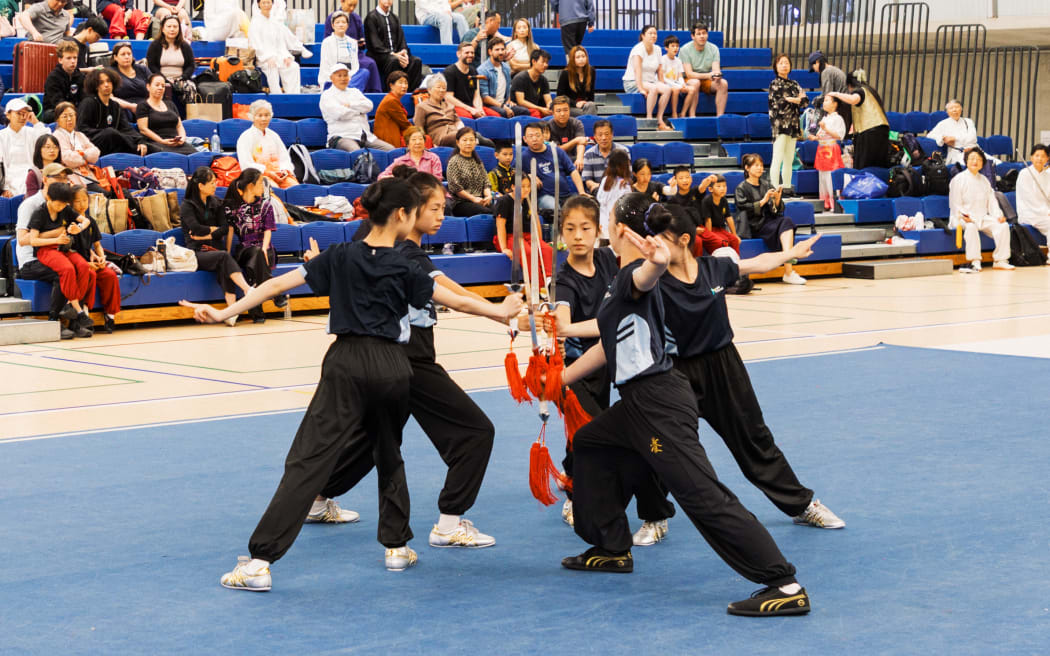
A team demonstrates sword skills at the 2025 New Zealand National Kung Fu Wushu Championships. Photo: RNZ / Yiting Lin
He believed that learning martial arts provided Chinese New Zealanders growing up in New Zealand with an opportunity to connect with their cultural heritage, while students from other ethnic backgrounds could gain an understanding of Chinese culture through practicing kung fu.
"We live in a multicultural society, and it's really important for every culture in New Zealand to have an opportunity to connect with its roots," Keith said.
"I have a diverse group of my own students and all of us have embraced diversity and have enriched our lives by learning kung fu and the Chinese culture and philosophy that goes with it."
For Keith, martial arts have also laid the foundation for success in his career, relationships and other aspects of his life.
"Wushu has ... well, kung fu in general ... has been an extremely important part of my life because it gave me a strong foundation, a strong core, a strong mind," he said.
"Through the course of my life, every single challenge I've ever had, I've always got through it with ease because of the discipline [and] strength that I have gained through my training, so I've been very fortunate.
"But it's all in the 'doing'. You have to do the art. You have to ... devote yourself and commit yourself to the art, and the rewards are many."



