


Many workers in New Zealand return to work each year dreaming of finding a job in a completely different industry.
However, few are brave enough to take that leap.
A survey of New Zealand workers by employment website SEEK last year showed that more than half regretted their career choice.
What's more, while 41 percent of respondents in the survey were open to a career change, just 6 percent were actively pursuing one.
Three workers who have successfully secured a new job in another sector are software engineer-turned-musician Amy Shuang Wang, gelato store owner KahWen Tan, who used to work in the tech industry, and cybersecurity consultant Kate Han, who has previously worked in a variety of fields, including acting and journalism.

Software engineer-turned-musician Amy Shuang Wang Photo: RNZ / Yiting Lin
'Lose your mind to find your soul'
In a cozy home studio in East Auckland, Wang is doing something she never thought possible - singing and composing music.
Wang studied computer science on the suggestion of her cousin, who told her it would help land a job after graduation.
However, after working at different companies for seven years as a software engineer, Wang started to feel burnt out.
"I felt like life was a little bit dull, and I felt stuck," she said.
"You do what you're told to do, and you get paid every month."
She decided to do something fun and started taking singing lessons, an activity she enjoyed growing up.
Although Wang had been learning how to play guitar for 14 years, she realised she could also write songs and soon discovered that she enjoyed the process.
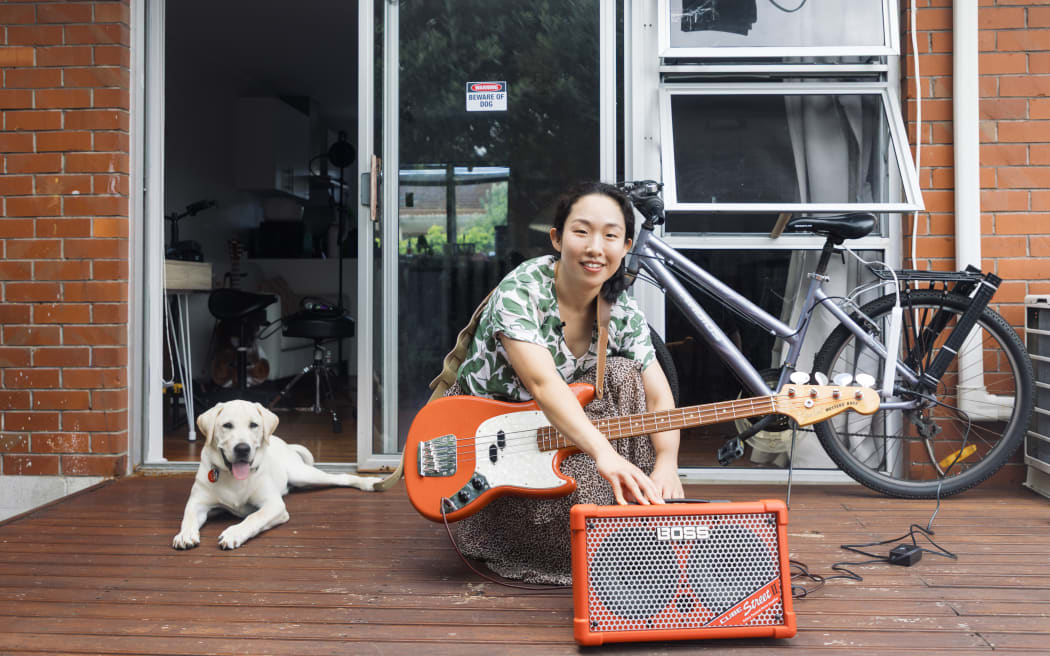
Amy Wang, singer-songwriter Photo: RNZ / Yiting Lin
Performing under the name Raging Flowers, Wang has written 35 songs, including one about her career change.
She has released nine of them since 2023, with a song titled Tissue Paper winning first place in an international art competition dedicated to mental health in 2024.
Wang also formed a band recently, planning to perform with the group at an event in Auckland next month as part of Lunar New Year celebrations.
"Doing music is so much more fulfilling and fun ... just like being creative is mentally stimulating," Wang said.
"I discovered I really love connecting with other people through music and performing music."
Life had been less comfortable than her previous career with financial pressure and loneliness, but she experienced more satisfaction, Wang said.
"Even though it's so risky and stressful, it makes me feel a lot more alive. It makes life more interesting," she said.
"If I knew how hard it would be, I wouldn't have done it, but I'm really glad I did. I heard sometimes you have to lose your mind to find your soul.
"Looking back, the financial anxiety is less scary than it felt in the moment. There are always ways to make a living, but we have to stay calm and believe in ourselves to see them."
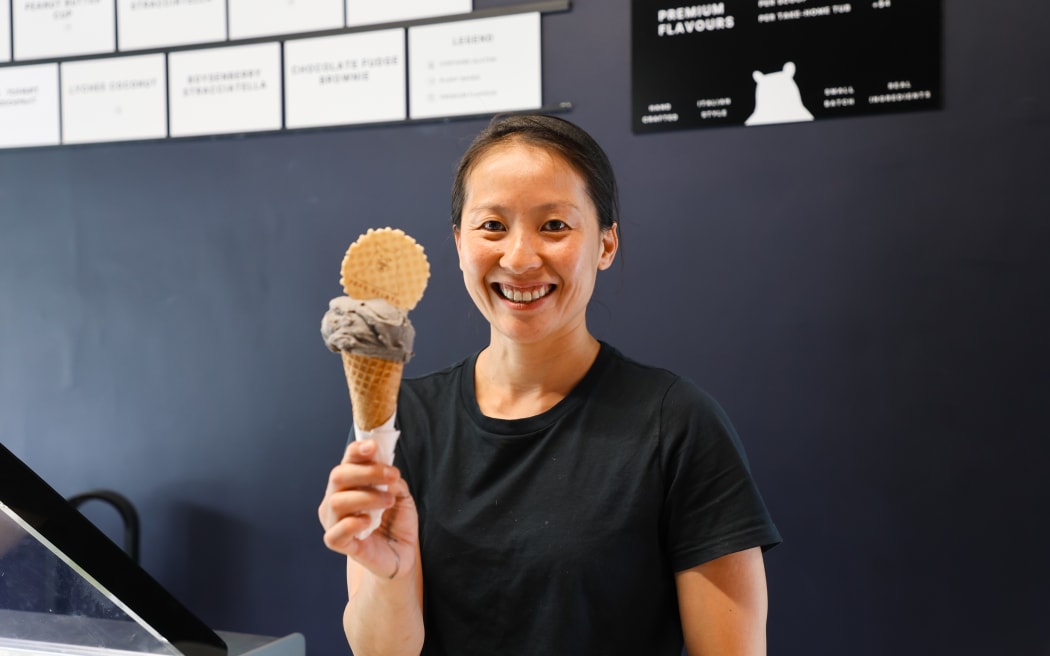
KahWen Tan, co-owner of Bear Gelato Photo: RNZ / Yiting Lin
'Hugely rewarding'
Tan worked in operations and strategy in the technology industry for a number of years.
These days, Tan and her husband, Ryan Scott, run a gelato store on Dominion Road in Auckland.
Her last tech role was in Berlin and the idea of starting a gelato business came about after being inspired by a local shop there.
"We wanted to try something different," Tan said. "Specifically, we wanted to try to build something ourselves. And we thought the small business would be a nice way to do it."
They started off in a cart in 2023 when they moved back to Auckland and opened a physical store the following year.
"You really do have to do everything, from all the kitchen preparation up to your marketing to your finances," Tan said. "There are a lot of learning aspects which you don't usually get exposed to in your corporate careers."
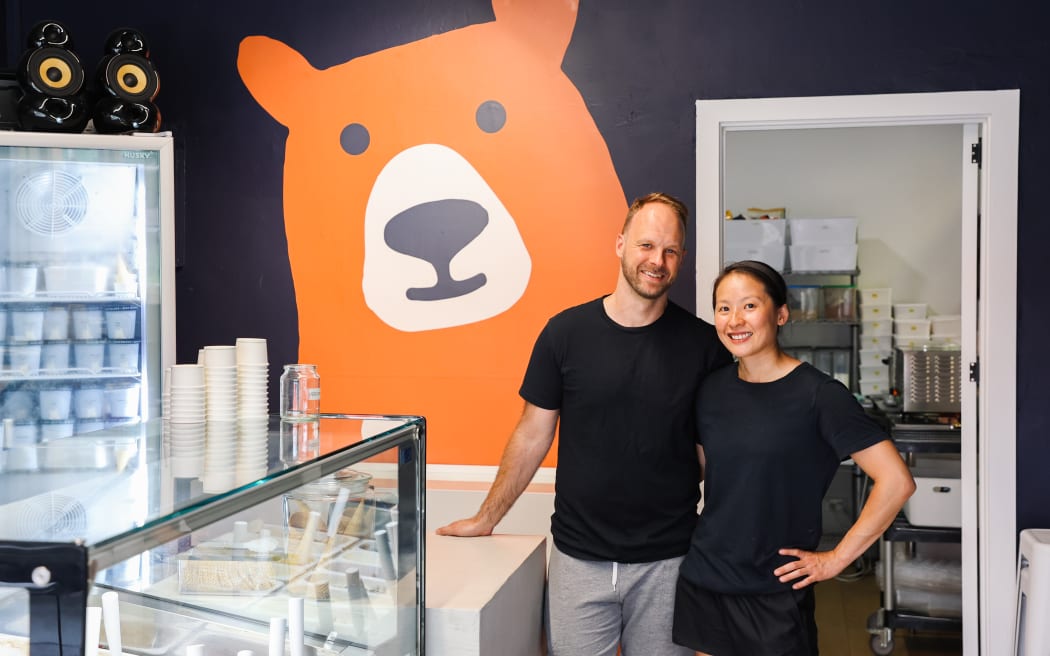
KahWen Tan and her husband, Ryan Scott, at their gelato store in Auckland Photo: RNZ / Yiting Lin
Tan said running a business was "very hard work" and unlike working for a company, at which one can just close their laptop and go home at the end of the day.
"It's a little bit of a never-ending sort of role, but at the same time, building your own business has been hugely rewarding," she said.
She enjoyed seeing the direct impact of her day-to-day work, something that was hard to find in prior corporate roles.
"I think a big thing is about finding something that you are interested and passionate about," Tan said.
"It is a lot of work, so if you are doing it just because you don't want to work for a boss, for example, and you don't find something that you're passionate about or interested in, you're not going to have a good time."
Scott returned to full-time tech work after the couple opened the store to support its operation, something they were "genuinely proud of".
"Ultimately, we want to make a product that brings people joy and that we enjoy making," he said.
"Our goal is to build something enduring, a business that becomes part of the communities we operate in over the long term."
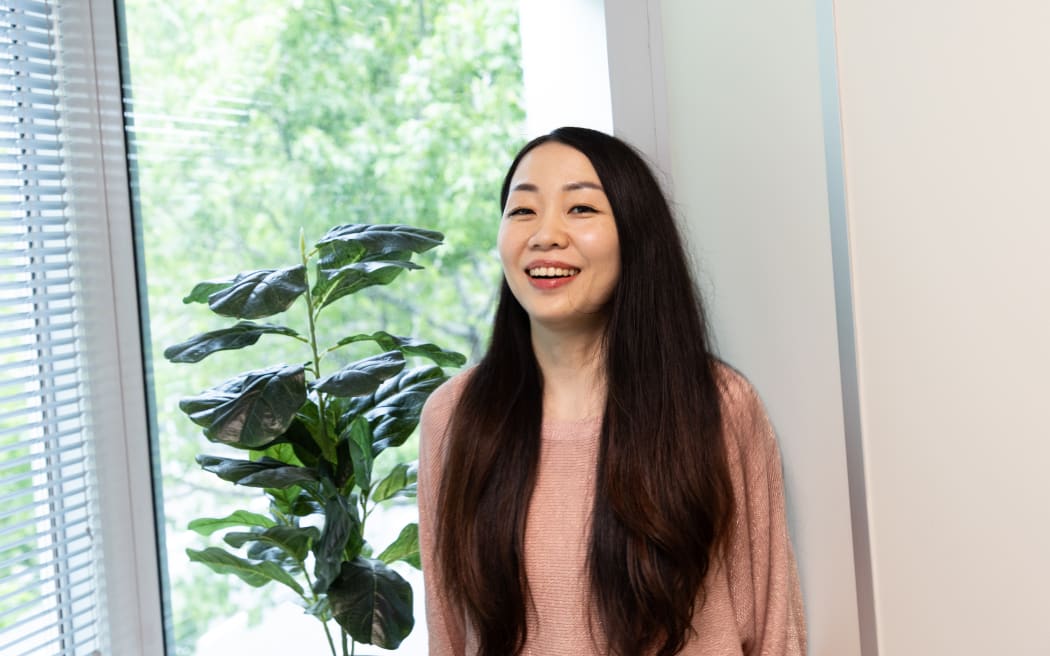
Kate Han, a cybersecurity consultant at Kordia Photo: RNZ / Yiting Lin
'Just go for it'
Han has worked in a number of fields including sales, marketing, acting and journalism before embarking on something completely different.
She taught herself computer coding during the Covid-19 pandemic.
Enjoying the lessons, she completed a one-year diploma in cybersecurity and now works as a cybersecurity consultant at Kordia.
She was attracted to working in the technology sector partly due to the remuneration that was typically available.
"I really love [my] current job," she said. "It's very challenging and I have to learn new things all the time."
She frequently met clients to understand their business needs and security landscapes before conducting assessments, hosting workshops and identifying gaps.

Kate Han says her current job is challenging but fun. Photo: RNZ / Yiting Lin
She found the work challenging when she first started, as many of her peers had studied computing for several years before landing a job in the industry.
"I only did it [studied computing] for, like, one year, so it was very challenging," she said. "But luckily, I have an amazing team. The people there are very helpful and they teach me stuff all the time."
However, Han said her previous work experience in other fields had proven useful in her current role, allowing her to repurpose the communication skills she learned as a journalist and teaching skills she learned as a drama teacher, which are useful for communicating with stakeholders and hosting workshops.
Han said age was irrelevant in terms of changing careers, noting that AI technology now allowed people to learn new skills much faster than before.
"As long as you can do a good job, and as long as you can learn fast and you're passionate about what you do, choose a career that makes you happier and choose a career that speaks your value and choose a career that makes you a better person," Han said.
"Just go for it."
Mindset shift
Yashika Chandhok, a lecturer at the Business School at Auckland University of Technology, said international research showed that individuals in advanced economies typically had between three and seven distinct careers over their working lives.
New Zealanders were unlikely to differ substantially, Chandhok said.
She said long-term evidence showed a clear shift away from working in the same jobs for life, with key reasons including rapid technological changes, AI adoption, structural industry changes, changing worker values and increased cost of living pressures.
"Overall, I feel that career change in New Zealand is now a mainstream feature of working life," Chandhok said.
"While exact lifetime counts are not formally measured, evidence strongly indicates increasing mobility, strong generational differences and a growing emphasis on sustainable, purpose-aligned careers, particularly among younger workers."
Rob Clark, country manager at SEEK, said knowledge was key to any potential career switch.
"Knowing what you can expect from the industry and role is vital to help you understand if it suits you and your lifestyle, where the opportunities are and if you will have any transferable skills that will put you in good stead to make the switch," he said.
"Arming yourself with accurate, up-to-date information is the key to building confidence and making informed decisions."



